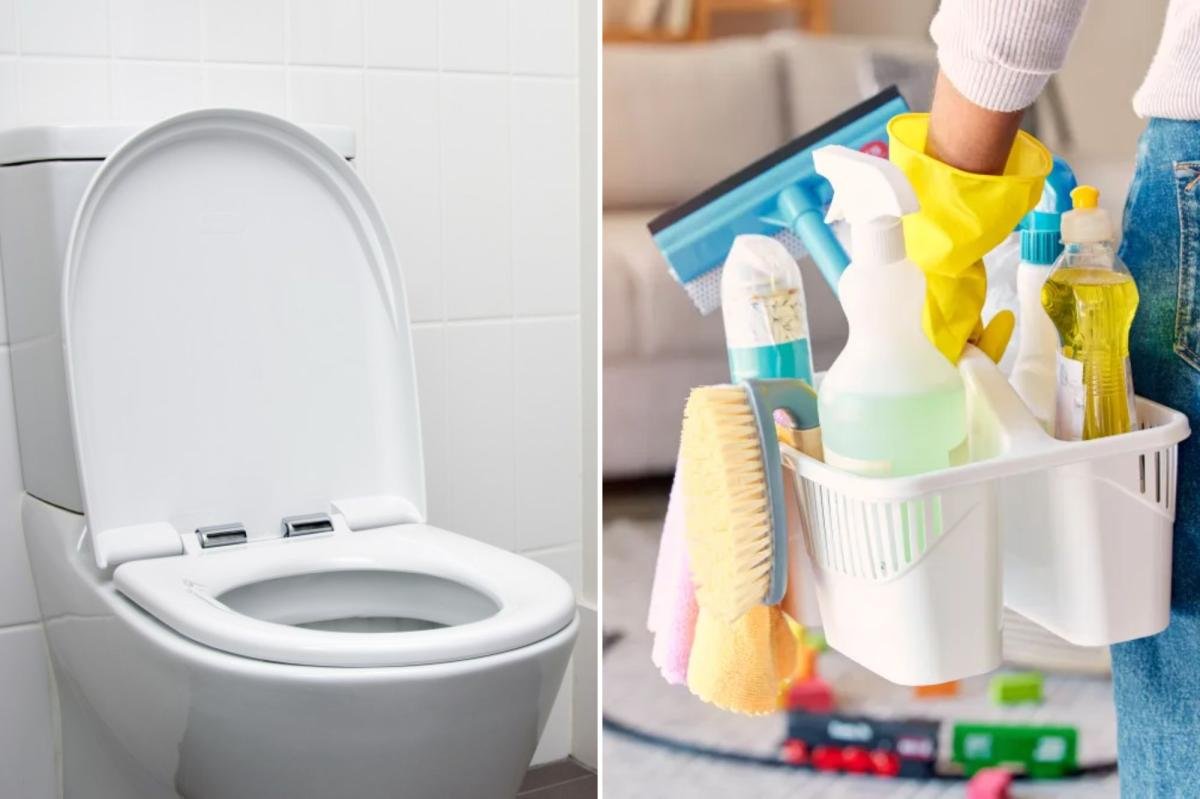
Bathrooms have a crappy reputation.
Many Americans spend hours scrubbing the loo, with 1 in 5 saying they’d give up half their annual salary for a bathroom that stayed clean and sanitized forever.
But despite its grimy notoriety, the toilet isn’t the germiest thing under your roof.
Your toilet seat may be one of the cleaner surfaces in your home, according to researchers. gmstockstudio – stock.adobe.com
A study found that some of the biggest hot spots for bacteria, mold and other microbes are hiding elsewhere in the home — while the toilet seat ranked surprisingly low by comparison.
Researchers behind the NSF International Household Germ Study had volunteers in the homes of 22 families swab 30 common household items, testing for bacteria, yeast and mold.
Their results challenged one of the biggest cleaning myths: The bathroom isn’t the dirtiest in the house. Instead, the kitchen claimed the grubby crown, with food-preparation areas harboring more bacteria and signs of fecal contamination than many bathroom surfaces.
Researchers found coliform — a family of bacteria that includes salmonella and E. coli and is an indicator of potential fecal contamination — on more than 75% of dish sponges and rags, 45% of kitchen sinks, 32% of countertops and 18% of cutting boards. Unwashed produce, raw meat and poultry, failing to wash your hands after using the bathroom and even pets are among the most common sources of coliform in the home.
By comparison, the highest levels found in the bathroom were 27% of toothbrush holders and 9% of bathroom faucets. Toilet seats, meanwhile, contained coliform on just 5% of samples.
The kitchen also topped the list for yeast and mold, which were found on 86% of dish sponges and rags, 50% of coffee reservoirs, 68% of computer keyboards and 64% of toothbrush holders. Staph bacteria appeared in more than 5% of households, with the highest levels found on pet toys (23%) and dish sponges and rags (18%).
Researchers found that many of the biggest germ hot spots are hiding in plain sight around the house. Jordan C/peopleimages.com – stock.adobe.com
Toilet seats, on the other hand, contained yeast and mold in 27% of samples and staph in just 5%, making them considerably cleaner than many everyday items people touch or use without a second thought.
Researchers added that warm, moist environments — such as sponges and coffee reservoirs — create ideal “breeding grounds for germs,” compared to smooth, cold surfaces like keys and money.
“The toothbrush holder often has many of the factors germs need,” Lisa Yakas, a microbiologist at NSF International told Time. “It is dark, damp and not cleaned as frequently as it should be.”
Items people typically use while eating, like the computer keyboard, can also accumulate germs over time if they aren’t cleaned regularly.
To conduct the study, volunteers used sterile swabs to collect samples from a 3-by-3-inch section of each of the 30 household items before sending them to a lab for analysis. Before the testing, participants were also asked to guess which items they believed were dirtiest. Their assumptions didn’t entirely match the results.
What volunteers thought were the dirtiest items:
Toothbrush holder
Dish sponge/rag
Money
Pet Toy
Counter top
Bathroom door knob
Kitchen sink
Pet bowl
Toilet handle
Bathroom light switch
Actual Top 10 dirtiest items:
Dish sponge/rag
Kitchen sink
Toothbrush holder
Pet bowl
Coffee reservoir
Bathroom faucet handle
Pet toy
Counter top
Stove knobs
Cutting board
That’s not to say that bathrooms are off the hook.
A 2014 study examining public restrooms on a college campus found staph, human papillomavirus, herpesvirus and E. coli, among other viruses, on surfaces such as toilet seats, soap dispensers and the floor surrounding the toilets,
Thankfully, the chances of a pathogen surviving is extremely low, mainly because we’re already pretty dirty ourselves.
“Human beings are just laden with bacteria, some of which have the propensity to cause disease. But for the most part they’re all commensal organisms,” co-author and microbiologist Jack Gilbert told the University of Chicago Medicine.
“They’re hanging around with us and we’re perfectly healthy and they aren’t causing us any danger or harm.”