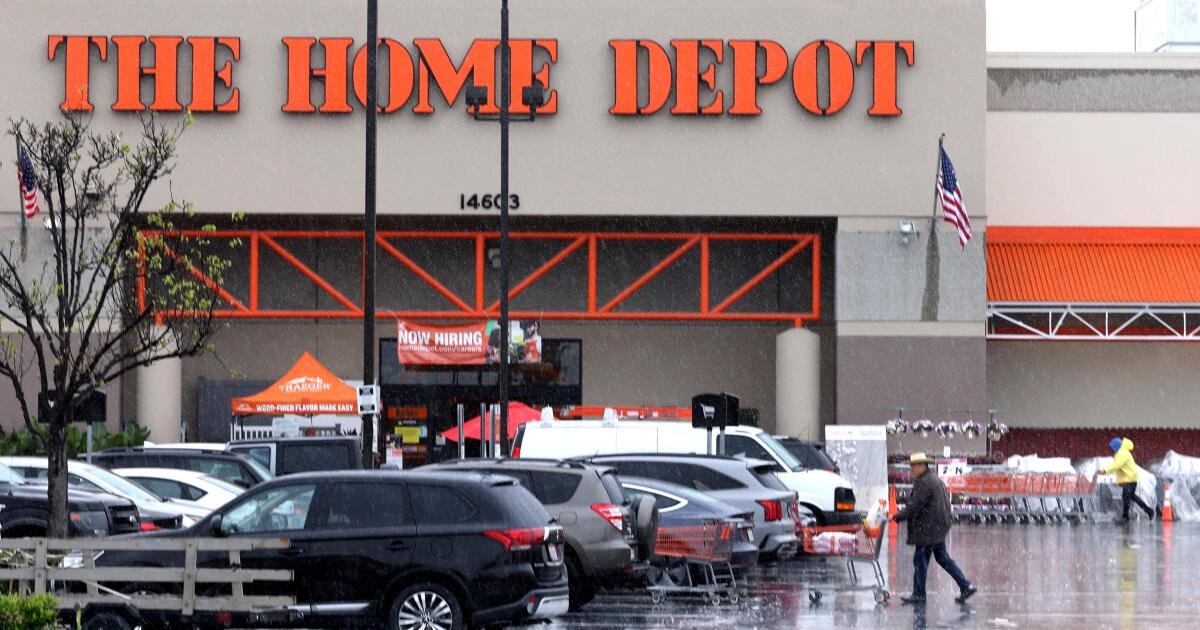
In a requirement that is the first of its kind in the country, some 600 commercial and industrial properties in the Los Angeles area will have to clean up the water that runs off their parking lots or pay to have it cleaned up. The Los Angeles Regional Water Quality Control Board voted to require shopping centers, warehouses, private hospitals and office complexes whose properties drain into the Dominguez and Los Cerritos channels to get stormwater permits.The change is intended to hold commercial, industrial and institutional property owners accountable for the pollution their sites send flowing into drains, said David Nahai, chair of the L.A. water board.It “addresses the effects of concrete, asphalt and other impervious surfaces that cover the urban landscape in these two watersheds, to protect water quality in the creeks, rivers and beaches downstream,” he said.Dominguez Channel begins in Hawthorne and drains Gardena, Torrance, Harbor Gateway, Carson and Wilmington. The Cerritos Channel watershed takes in a smaller area, including Lakewood, Bellflower, Signal Hill and east Long Beach.Environmental advocates, who have pushed for the change for years, said the new requirements will make a major difference in addressing water pollution.“For too long, cities and taxpayers have shouldered the entire cost of cleaning up pollution that comes from these large commercial properties,” said Bruce Reznik, executive director of the group Los Angeles Waterkeeper.But representatives of developers, property owners and business groups raised concerns about the costs and requirements that they said are sometimes unclear. Business groups said they already pay property taxes in L.A. County, including a special tax for cleaning up stormwater, and imposing new regulations in this way doesn’t make sense.Mike Lewis of the Los Angeles County Business Federation, or BizFed, said in June the new requirement is likely to face an appeal.“By the time a final decision is made, it could look completely different,” Lewis said in an email. “As written, the permit hits existing property owners with retroactive costs while simultaneously ignoring the stormwater taxes they’ve been paying in good faith for years.”The effort to mandate stormwater permits has been discussed in L.A. County for years.In 2015, environmental groups petitioned the U.S. Environmental Protection Agency on the issue. They won in court, clearing the way for the L.A. water board to act.Many Southern California creeks and concrete-lined channels are deemed “impaired” by regulators because of high pollution levels. When rain falls on parking lots, water runs off carrying metal dust and chemicals from vehicle tires and brake pads, oil and grease from engines and bacteria from trash.Facilities will be able to comply with the new rules in three ways: They can make sure water coming off their property meets pollution limits. They can build retention ponds or swales to filter out contaminants before water percolates underground. Or they can help pay for local stormwater projects that cities need.Properties with at least five acres of impervious surface will be subject to the rules.State officials estimated the costs at $4,100 per acre of paved or impermeable surface for those that decide to help fund local stormwater projects, and said the costs for other options could be considerably higher.Last month, California Coastkeeper Alliance and other nonprofit groups tried to expand the clean water protections statewide by petitioning six other regional water boards. They are also calling for the California Legislature and the State Water Resources Control Board to broaden the reach of the requirements, which business groups oppose.In 2022, Gov. Gavin Newsom vetoed legislation that would have required stormwater permits for many businesses statewide. In 2025, a similar bill faced opposition and died in the Legislature.Environmental groups estimate, using methods developed by the EPA, that unregulated businesses have been responsible for 30% to 60% of copper and zinc found in waterways, which at high concentrations are toxic to fish and other animals.Until now, businesses have not had to reduce the polluted water that flows into drains, and the costs of cleanup efforts have fallen to cities and counties, said Sean Bothwell, executive director of California Coastkeeper Alliance.“The corporations that own warehouses, fulfillment centers and shopping malls have had a free ride for 30 years while the public paid to clean up their mess,” he said. “That era is ending.”