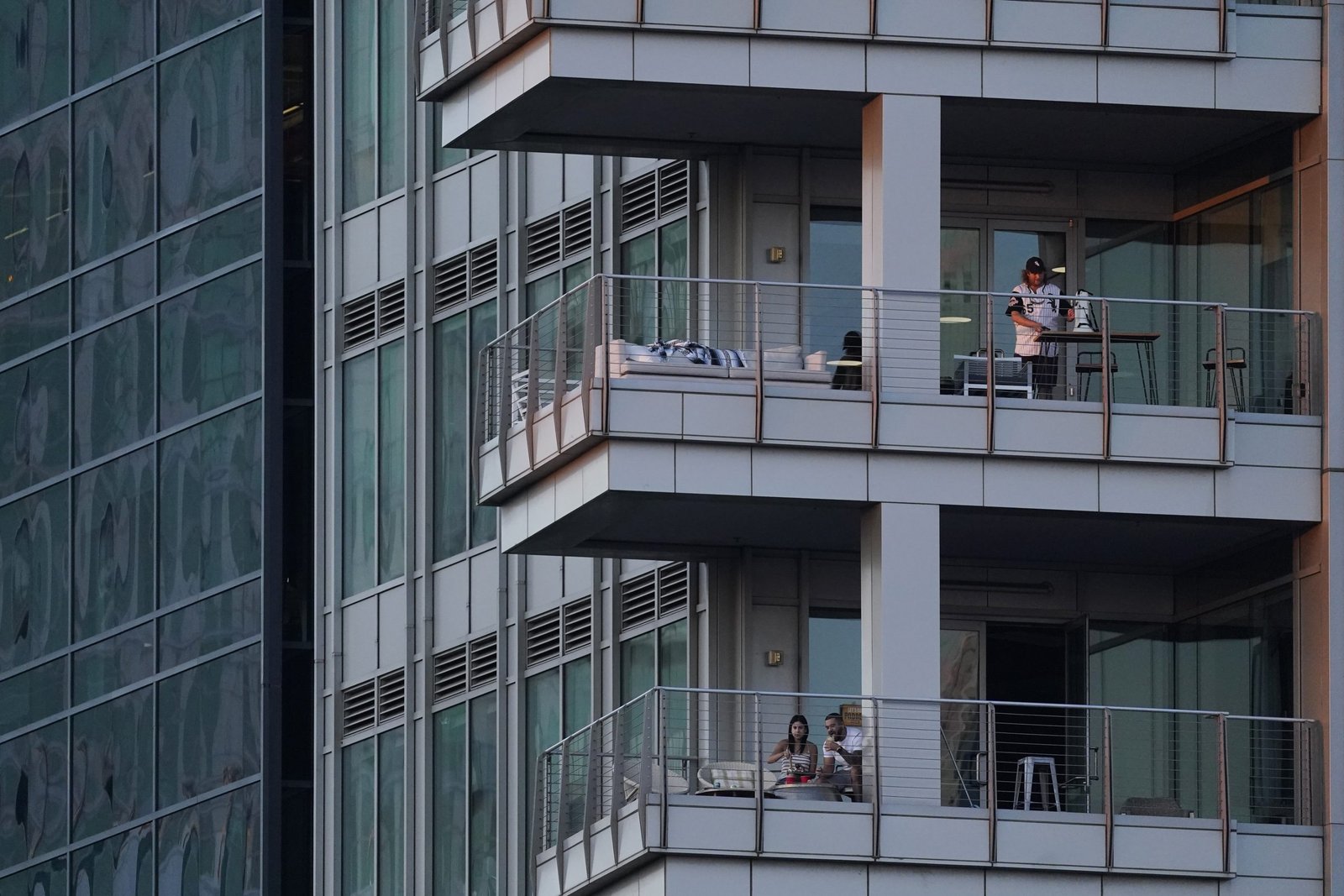
I’ve been writing about an effort in California to legalize “plug-in solar,” small panels renters or condo-owners can install on balconies and plug directly into a regular outlet.
Utility companies like San Diego Gas and Electric oppose the bill, which its supporters suspect is because, when people generate their own energy, there’s less need for utilities to build expensive infrastructure that generates profit for utility shareholders.
But SDG&E’s subject matter expert on solar and batteries, Sherise Blackwood, told the California Assembly’s Utilities and Energy Committee last month that the utility is worried about safety.
“Safety requires visibility and SB 868 removes it,” Blackwood said at the June 10 hearing.
SB 868 would allow Californians to purchase and install plug-in solar units without having to go through a utility company’s complex application process to interconnect with the grid – work typically reserved for companies that install rooftop solar or build large-scale solar farms. Not an elderly San Diegan living on a fixed income in their condo.
But SDG&E says it’s worried the bill means any number of small units could start generating small amounts of power and feeding that back into an apartment’s electrical wires. That effect times thousands of balcony solar panels could make a lot of power without the utility’s knowledge – they argue – and an electrical worker trying to fix the grid could hurt fixing a power line they thought had been deenergized aka, turned off.
Solar proponents claim that concern is exaggerated.
“For more than 15 years it’s been standard on all rooftop solar panels to shut down automatically when the grid goes down,” said Dave Rosenfeld with the Solar Rights Alliance, a group advocating for the bill. “There’s been no lineworker incident as a result.”
I heard the same from BrightSaver, one of the companies that’s been supporting bills like SB 868 across the country with success in at least eight states.
I asked both to tell me how they knew there’d been no incidents. I didn’t get an answer. I reached out to the California Public Utilities Commission about whether there’s been a death in California associated with a solar panel sending power back through the grid.
I didn’t hear back.
Then Blackwood reenergized my quest.
During the June 10 hearing, Assemblymember Lisa Calderon, a Los Angeles Democrat, asked Blackwood to give an example of a backfeeding incident.
“Yes, we’ve actually had a number of them,” Blackwood responded.
She goes on to describe that SDG&E crews were out working on a power line which was supposed to be deenergized. But there was some solar hooked up to a battery and the inverter (the device that is supposed to automatically cut the power from the panel) had failed.
“The (power) line actually was back fed by the PV which was supplying energy to the battery and it was backfeeding to our grid while the utility workers were there,” Blackwood said.
She didn’t describe whether anyone had been injured. She said the workers had done some “due diligence” beforehand and found the line had unintentionally been energized by the solar generation.
I reached out to SDG&E to get more information about the incident since some of the lawmakers said they would investigate what Blackwood had shared. Spokesperson Anthony Wagner got back to me Monday saying what Blackwood had shared was a “generalized example” and not a reference to a specific incident.
“SDG&E and others across the industry — have encountered instances where customer-owned generation and battery systems did not operate as intended and created unintended backfeed conditions during outages. In those situations, energy can continue to flow onto lines that are expected to be de-energized, which is why crews follow strict verification procedures before beginning work,” Wagner wrote.
He said those situations are rare and mitigated through safety protocols. But he said the fact that they occur underscores why permitting and sending solar through the interconnection application process is required to protect everyone.
Bill Brooks, of Brooks Engineering who Wiener brought to the committee as an expert witness, said he helped write California’s Rule 21 solar safety standards in the early 2000s. He also said Blackwood’s reported incident of solar sending power back to a downed grid would be news to him.
“We invented the anti-islanding technology for these inverters and that technology has been flawless over the last forty years,” he said. “So it’s very important to know if there’s an event where something doesn’t happen correctly, you can rectify it.”
In Other News
CalMatters’ Deborah Brennan and photographer Adriana Heldiz bring us this beautiful story about whether San Diego’s aging fishing fleet can be saved.
Environmentalists are worried about a proposed project to build a sports complex near the Gaylord Pacific Resort and Convention Center near and on top of sensitive habitat. (inewsource)
Our Tigist Layne discovered that the U.S. military has finally decided to help the city of Oceanside restore the beach its military installations eroded – a full human lifetime since admitting it was their fault.
We broke the news in our Politics Report last week that San Diego Community Power’s CEO is “on leave.” Jack Clark, Burns’ chief operating officer, has taken over as acting CEO.
Mexican officials toured Oceanside’s Pure Water recycling facility. The city of Tijuana faces a water crisis due to reliance on the dwindling Colorado River. (KPBS)
Some jerk(s) illegally harvested a bunch of female lobsters carrying eggs from La Jolla’s marine protected area last month. Most of them were under legal size to harvest, to boot, even though it’s completely illegal to take anything from a marine protected area. (California Fish and Wildlife)
A report from the International Council on Clean Transportation estimated that every day, one person in San Diego County dies from vehicle pollution and one new child gets pediatric asthma. (KPBS)
Related Posts