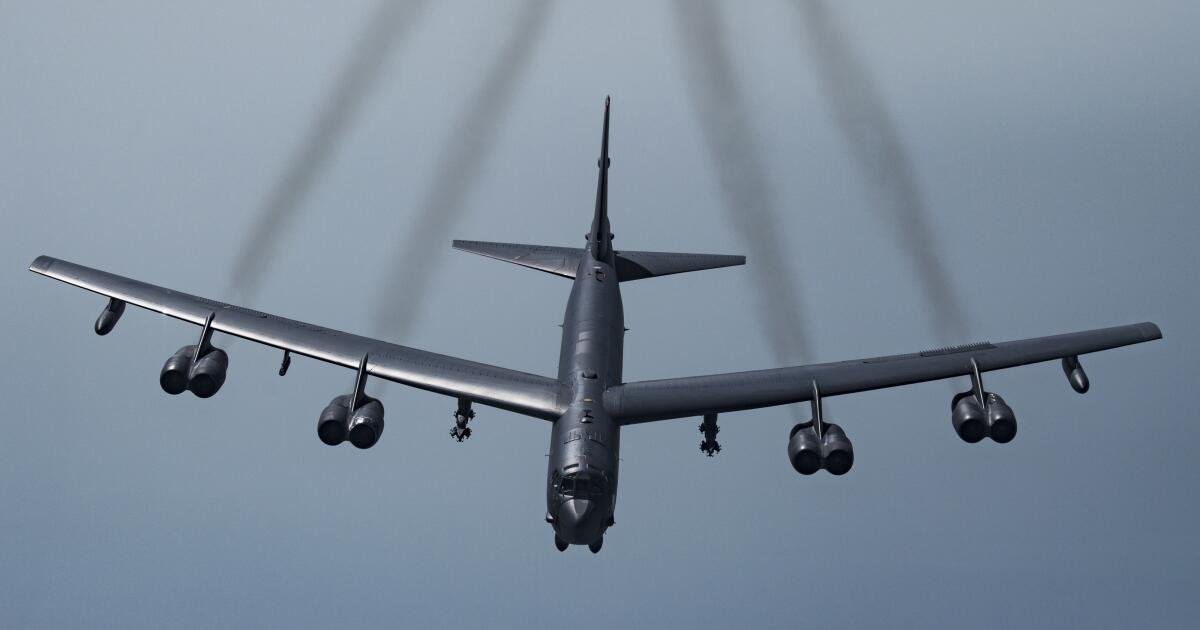
A $21-billion Air Force effort managed by Boeing Co. to upgrade the engines, radar and communications of the iconic B-52 bomber is seeing cost growth and delays during early development, according to a congressionally mandated audit.Ten of 13 upgrade projects for the aircraft, which was first introduced over 70 years ago, are “experiencing cost, schedule or performance challenges,” according to a Government Accountability Office report released Friday. That includes a crucial Rolls-Royce Holdings Plc engine upgrade and a major radar project, both of which are facing all three issues.There are 76 B-52s flying today of the 744 produced and it’s “significantly outlived its original lifespan,” said GAO. The bomber first entered service in 1955. The Air Force effort is focused on key improvements “in part to allow the aircraft to operate through the 2050s” in tandem with B-2 and B-21 stealth bombers.The delays and overruns underscore the Trump administration’s challenge in speeding weapons updates and procurement, particularly at a time when operations in the Middle East are straining U.S. stockpiles. B-52s have been flying Iran missions since March.The workhorse B-52 — nicknamed BUFF, for “Big Ugly Fat Fellow” — can fly 8,800 miles without refueling, conduct conventional and nuclear bombing missions and carry 70,000 pounds of ordnance. The bomber payload includes nuclear or conventionally armed cruise missiles as well as GPS-guided Joint Direct Attack Munition, or JDAM, bombs. The F130-200 engine program — the costliest effort — “will likely continue to face significant challenges as the Air Force plans to begin production” later this decade “with little or no developmental flight testing,” portending more delays and cost overruns as problems are found, GAO assessed. Rolls-Royce is building and testing the F130 engines at its Indianapolis plant.The Air Force’s cost estimate of the engine upgrade’s development phase has risen to about $15 billion from $11 billion in 2018, and since 2023 its initial operational capability has been delayed by another 15 months, to 2033, or five years late to the original target, according to GAO’s analysis. The cost increase prompted the Air Force to initiate an affordability study that GAO says is ongoing as of March.The engine effort faces risks of “compounding schedule delays, and increased costs largely due to” a practice called “concurrency — or the overlap between development testing and starting production,” said GAO. That overlap often leads to cost and schedule growth after testing discloses flaws that require design changes, it said.Air Force officials told GAO they “recognize their approach presents risks but are willing to assume those risks, in order to avoid additional delays in the schedule,” according to the report.Once production begins, the service plans to order between 600 and 650 engines from Rolls-Royce and order aircraft subsystems such as cockpit digital displays and overall integration work from Boeing.The Air Force announced in May that the engine has completed a formal Critical Design Review. That’s a joint effort by Boeing, Rolls-Royce, and the Air Force meant to “enable the B-52J to remain in the fight for future generations,” said engine program manager Lt. Col. Tim Cleaver, who called it “a pivotal moment for the program.”Capaccio writes for Bloomberg.