NEWYou can now listen to Fox News articles!
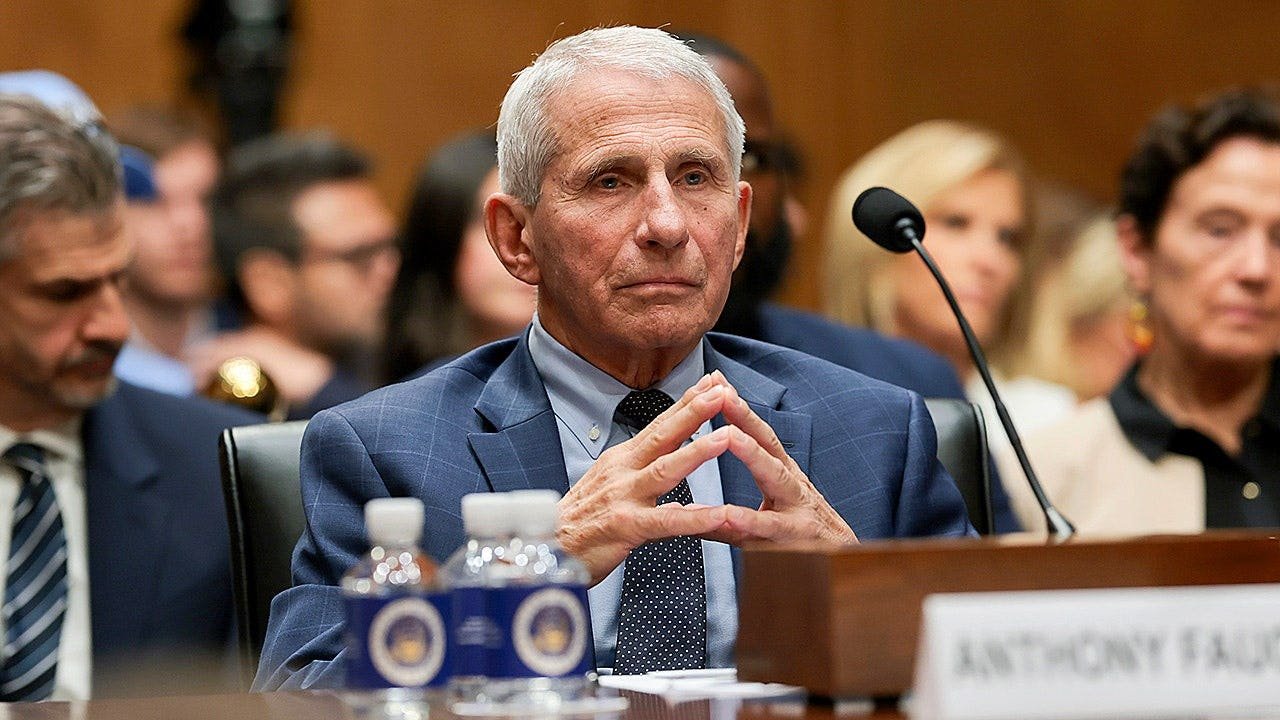
Dr. Anthony Fauci, the point man for America’s pandemic response who was once the doyen of Hollywood (see here and here), turned in a less-than-stellar performance before the Senate Homeland Security Committee. After giving a short, entirely self-serving opening statement during which he accused Committee Chair Sen. Rand Paul of having an “unhinged obsession” with him, Fauci invoked the 5th Amendment Self-Incrimination Clause, which allows a witness to refuse to answer questions if doing so might incriminate him, 111 times to avoid answering questions. But was his invocation proper, and, regardless, what can the Senate do about it?Several factors suggest Fauci’s invocation was improper. Two are critical.The first is Fauci’s pardon. Prior to leaving office, Joe Biden issued a blanket pardon to Fauci for any federal crimes he might have committed “from January 1, 2014, through [January 19, 2025] arising from or in any manner related to his service as Director of the National Institute of Allergy and Infectious Diseases, as a member of the White House Coronavirus Task Force or the White House COVID-19 Response Team, or as Chief Medical Advisor to the President.”CAN FAUCI HIDE BEHIND THE FIFTH? GAME-CHANGING BIDEN PARDON MAY NOT PROVIDE COMPLETE COVER, EXPERTS SAYThe second is time: Fauci retired in 2022, making it unlikely that any state crime he might have committed would fall within the applicable statute of limitations, assuming any state could credibly claim that he committed a crime or that venue was proper in that state. In Hoffman v. United States (1951), the Supreme Court said the privilege against self-incrimination protects against real dangers, not remote or speculative possibilities.Two other things are clear. First, a witness can refuse to answer questions that might implicate him in a crime, not to avoid embarrassment. The Fifth Amendment is available only to avoid criminal exposure, not public ridicule. Prior to the hearing, Sen. Paul released over 1,000 pages from Fauci’s diary in which he chronicled fawning media stories about him as well as conversations with politicians, media personalities, and celebrities who heaped praise on him. They also suggest that he directed staff members to nominate him for various awards that netted him around $900,000. There are also entries suggesting he did not believe several of the public statements he made at the time about the virus’s origin or the efficacy of the measures he implemented to prevent the spread of the disease. Second, a witness cannot invoke the Fifth Amendment because he thinks he will be charged with perjury even if he provides truthful testimony.On the other hand, there are factors in Fauci’s favor. First, President Trump and several Republican Congressmen are arguing that Biden’s last-minute pardons, which would include Fauci’s, are null and void because, they claim, Biden’s staff used his auto-pen to sign those pardons without Biden’s knowledge or approval. If Fauci’s pardon is invalidated, he could be prosecuted by the Justice Department for federal crimes he might have committed during the period covered by the Biden pardon. Second, several state attorneys general have now said they are initiating investigations to see whether Fauci committed any state crimes related to his government service. Perhaps they envision a perjury charge for deposition testimony Fauci provided in Covid-related litigation. That effort might end up going nowhere, but Fauci is certainly entitled to take them at their word that he still faces legal jeopardy. These statements alone make it far more likely that a judge would ultimately determine that Fauci’s invocation of the Fifth was proper.Now that Fauci has invoked the Fifth and refused to answer the Senators’ questions, what can Congress do about it? Well, it has several options.REPORTER’S NOTEBOOK: WHY FAUCI’S 111 FIFTH AMENDMENT PLEAS COULD END UP BEFORE THE COURTSThe one they are currently contemplating is voting to hold him in contempt of Congress. This would require a majority vote by the Committee and by the full Senate. Since Republicans are in the majority, it is possible, if not likely, they have the votes to do that. If so, the matter would be referred to the U.S. Attorney for the District of Columbia (currently, Jeanine Pirro) to decide whether to seek charges against Fauci. If that happens, a judge will decide whether Fauci properly invoked the Fifth, using the standard established by the D.C. Circuit in Ellis v. United States (1969).CLICK HERE FOR MORE FOX NEWS OPINIONAnother alternative would be to grant Fauci use and derivative use immunity, in which case Fauci would have to testify, but if he was subsequently charged by either a state or the federal government, the prosecutor would have to prove that none of the evidence introduced against him was derived directly or indirectly from his compelled testimony. It was the prosecution’s failure to establish this that resulted in Oliver North’s conviction being overturned.Congress could vote to give Fauci transactional immunity, meaning he could not be prosecuted for any of the conduct that is the subject of his testimony, full stop. Of course, if he were to lie after receiving immunity and being compelled to testify, he could still be prosecuted for perjury.CLICK HERE TO DOWNLOAD THE FOX NEWS APPIn short, this saga still has a few more episodes to go.John G. Malcolm is a former federal prosecutor and is Vice President of the Meese Institute for the Rule of Law at Advancing American Freedom.