In 1972, an infamous event unfolded in Uganda — one that that subtly reverberates in American politics today.
That’s when Idi Amin, the unhinged dictator who beggared Uganda and killed an estimated 300,000 of its people during his eight-year rule, expelled around 76,000 people of Asian descent and expropriated their wealth.
One of those ousted was Mahmood Mamdani, father of New York City Mayor Zohran Mamdani.
New York City Mayor Zohran Mamdani speaks during a press conference in Brooklyn, NY, on Monday, July 27, 2026. Andrew Schwartz / SplashNews.com
Yet the mayor, and the Democratic Socialists of America movement he helps lead, has resisted the lessons that his family experience could have taught him about the dangers of class resentment and racial and ethnic sorting.
Today, Mamdani eagerly traffics in them.
It’s a profound and puzzling disconnect rooted in the radical distortions of Third-Worldism, a philosophy that’s increasingly gaining purchase in the United States.
Amin justified his purge of Asians by fusing class and ethnic grievance.
He derided the Asians that composed most of Uganda’s merchant class and taxpayer base as outsiders and “bloodsuckers” out to ruin the local economy.
Ugandans resentful of Asians’ prosperity reveled in their expulsion — at first.
But Amin’s action quickly collapsed the economy and plunged the country into poverty.
And predictably, the racial sorting at the heart of Amin’s purge didn’t end with Asians.
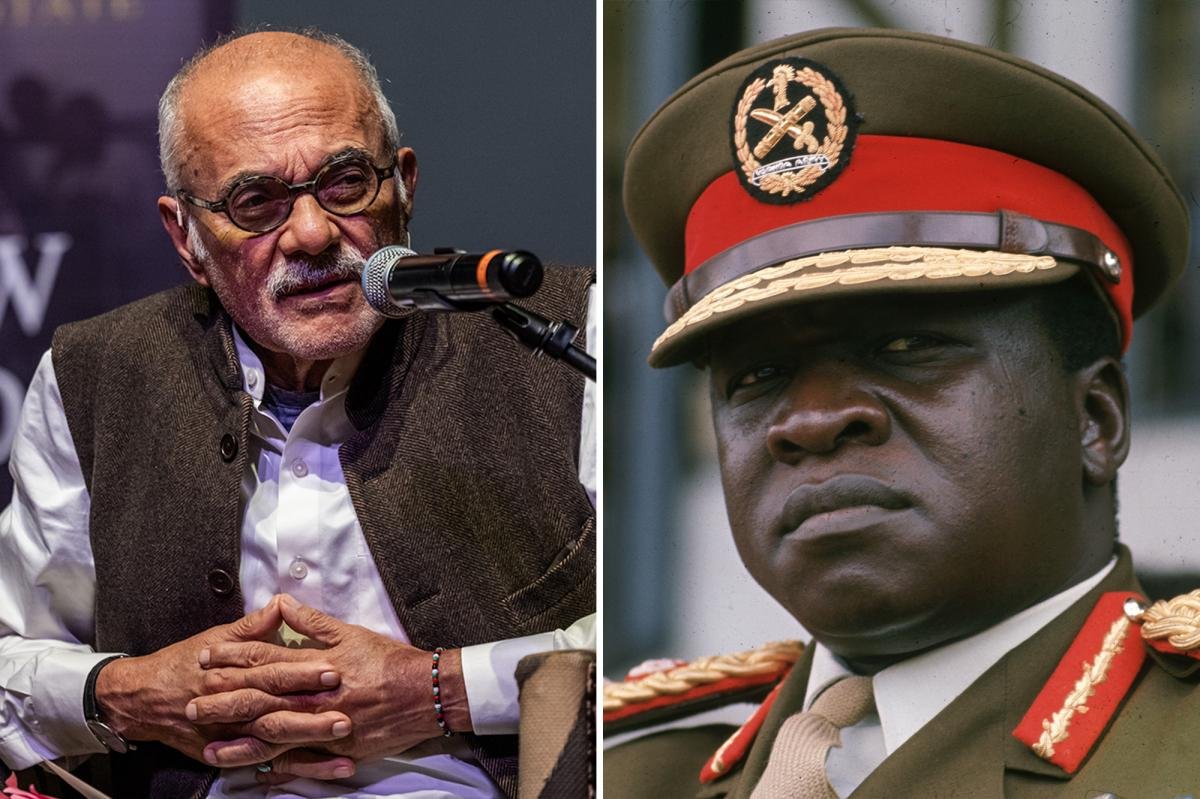
Mahmood Mamdani participates in a launch event for his book “Slow Poison” on Saturday, January 24, 2026, in Nairobi, Kenya. Getty Images
Once a government indulges the idea that race is an essential characteristic for ranking individuals, it can do so to any racial group.
Amin’s brutal security services later targeted tribes like the Acholi and the Lango that rivaled his own tribe, the Kakwa.
Yet even though this cautionary tale directly affected his family (his father only returned to Uganda after Amin was ousted), Mamdani has evaded its lessons.
He is instead a font of class grievance who believes the wealthiest class shouldn’t exist.
And he eagerly sorts people based solely on their race: One of his flagship initiatives embeds race as a qualification for everything from awarding contracts to hiring.
General Idi Amin, Ugandan soldier, dictator and head of state, circa 1972. Getty Images
Mahmood Mamdani’s thinking seems to have rubbed off on his son.
In his book “Slow Poison,” Mahmood softened Amin’s image by arguing that his barbarities were an act of decolonization meant to unify Uganda’s disparate tribes (despite Amin’s well-documented tribal persecutions).
He also approved of Amin’s alliance with Libyan dictator Muammar Gaddafi, who like Amin opposed the West — and expressed hostility to current Ugandan President Yoweri Museveni over his Western cooperation.
That’s a classic example of how Third-Worldism ascribes virtue or villainy to leaders based primarily on their view of the West.
This philosophy believes the globe is divided between the oppressive developed world and the virtuous developing world — a crude moral binary that downplays virtually any atrocity committed in the developing world as legitimate resistance, or as irrelevant given the sins of the developed world.
This worldview led Mahmood Mamdani to argue that Amin’s brutality was both inflated by the West and “informed, guided by the British and the Israelis” — in other words, that Amin’s brutality was at least partially the West’s fault.
Get opinions and commentary from our columnists
Subscribe to our daily Post Opinion newsletter!
Thanks for signing up!
The double standard inherent to this thinking is evident around the globe.
South Africa accused Israel of genocide at an international court — only for its president to later have a chummy meeting with a Sudanese warlord who is leading an honest-to-goodness genocide.
Numerous African countries push for slavery reparations from the West — and only the West, ignoring the heinous Arab slave trade or Africans’ own enthusiastic slaving — while defending China’s ethnic cleansing of Uighurs.
Third-Worldism is becoming increasingly prominent here at home.
Melat Kiros, a DSA-backed House candidate in Colorado, wants more immigrants from the developing world to win American elected office, saying they’ll force “recognition . . . of the exploitative and extractive nature” of American actions worldwide.
“The global world order as it exists today . . . fundamentally will have to shift,” she declared.
Translation: Americans should elect people born overseas who wish to weaken the United States so that it can no longer assert itself as a global “oppressor.”
Aber Kawas, a DSA New York state Senate candidate, characterized 9/11 as the fruit of America’s oppressive foreign policy.
New Jersey Democrat Adam Hamawy claims the United States is “propping up” genocide against Palestinians, yet he struggles to unequivocally condemn Hamas.
Third-Worldists, after all, are only ever interested in the sins of the West — never of the developing world.
Mahmood Mamdani’s willingness to burnish the reputation of one of Africa’s most infamous dictators — even one who directly victimized him — demonstrates the radicalism and moral distortions Third-Worldism inspires.
The political prominence of his son and a growing cadre of fellow travelers promises more radicalism and distortions ahead.
Joshua Meservey is a senior fellow at Hudson Institute focused on great power competition in Africa and African geopolitics. X: @jmeservey.