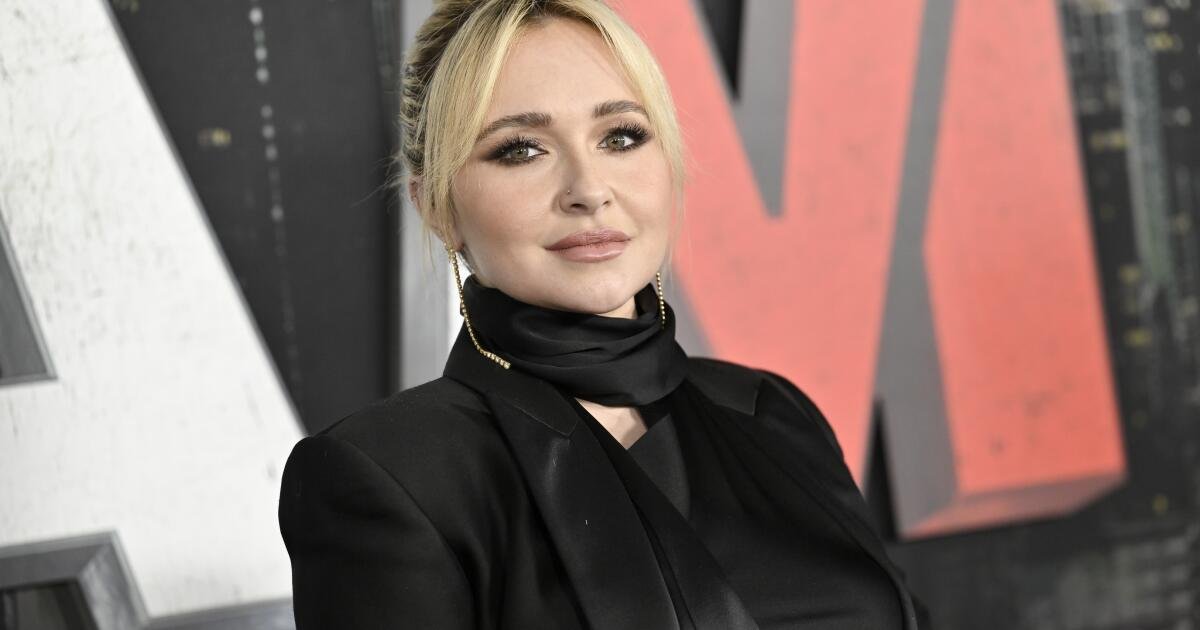
Hayden Panettiere’s death at 36 is a tragedy, but should not define her. Her willingness to share her struggles, including her experience with postpartum depression, offered a lifeline to millions. When celebrities die young, death itself too often becomes their primary legacy. As evidence of the dark side of fame or a reminder that no one is immune from the cruel quirks of mortality, an untimely end imprints itself dark and wide, dominating the other realities of the life as it was lived.Let’s not allow that to happen to Hayden Panettiere.Panettiere’s legacy began evolving from the moment her unexpected death was reported Sunday. After a 911 call, the star, best known for her roles in “Heroes” and “Nashville,” was found unresponsive following what was characterized as a cardiac episode. The cause of her death, though not immediately known, sparked the inevitable speculation. The word “overdose” was reportedly used by first responders at the scene and Panettiere has long been open about her struggles with drugs and alcohol, most recently in her memoir “This Is Me,” released in May.In the book and elsewhere she has, in fact, been open about many things — the family-destabilizing price that fame can exact from child/young adult actors; the perils of drug and alcohol abuse; the horrors of domestic violence; the grief over losing a beloved sibling; and, perhaps most important, society’s seemingly willful ignorance of the symptoms and realities of postpartum depression.In the hours following her death, many praised her talent and ability to shine in a more-than-three-decade career that also included “One Life to Live,” “Remember the Titans,” “Bring It On: All or Nothing” and films in the “Scream” franchise. During “Heroes’” white-hot initial season in 2006, she was the star of the year’s biggest tagline: “Save the cheerleader, save the world.”But if all actors aspire to be truth tellers, Panettiere actually was.Reading “This Is Me” now, it is impossible not to feel an almost supernatural chill. While the tone arcs toward the future — “All the heartaches I’ve endured,” she wrote in the introduction, “have allowed me to come to a place of empathy and understanding for everything my loved ones have come up against and, most importantly, for myself” — it is as much testament as memoir. Some of her story, though heart-wrenching in its details, is familiar — her career as an infant-model turned child/young-adult actor was successful but at great cost — but some of it is not. As an adult, Panettiere’s relationship with Brian Hickerson became physically and emotionally abusive, and she writes with startling, if circumspect, honesty about why she remained with a man who beat her — in part because she feared the inevitable media circus that would occur if she reported him — and why she finally set herself free. (Hickerson, who served jail time for assaulting her, remained in Panettiere’s life and was, according to some reports, with her on the day she died.)But no revelation is as courageous or groundbreaking as Panettiere’s description of her experience with postpartum depression.In 2013, she became engaged to Ukrainian world heavyweight boxing champion Wladimir Klitschko; in December 2014, she gave birth to their daughter, Kaya. It was a long and painful labor that resulted in a C-section, after which she hemorrhaged and almost died. Though she recovered physically, she struggled to bond with her daughter and resurrect her former self.As she writes in the book, and has said elsewhere, it wasn’t that she hated her baby or feared harming her but instead “a total blackout of emotion, like my soul was dead.”She was starring as Juliette Barnes in “Nashville” at the time; the writers had written Pannettiere’s pregnancy into the show and, in Season 3, Juliette also began experiencing postpartum depression. During a 2015 interview on “Live With Kelly and Michael,” Panettiere revealed why she understood Juliette’s struggles, and advocated for more discussion about postpartum depression. “There’s a lot of people out there who think that it’s not real,” she said. “That it’s something that’s made up in their minds or, ‘oh, it’s hormones,’ and they kind of brush it off. And it’s not true. It’s something that’s completely uncontrollable and it’s really painful and it’s really scary and women need a lot of support.”Though she didn’t go into the details of her own experience, merely owning it drew a conflicting response. While many praised Panettiere’s openness, Neutrogena threatened to end its 10-year relationship with her under a “morals clause.” Although the company could not legally do that, she later said, her contract was not renewed. Since then, Panettiere has spoken openly of a mental-health spiral that she did not initially realize was postpartum depression, particularly when publicizing “This Is Me,” in which she details both the anguish and her attempts to overcome it.After she finally sought treatment, she wrote, the medication she was prescribed flattened her — in one instance she fell asleep for hours on the set of “Nashville.” So she stopped taking it, leaning on alcohol and opiates instead, and soon found herself in an endless nightmare cycle of addiction.Her relationship with Klitschko, already strained by the fact that she remained in the U.S. while he continued to live in Ukraine, deteriorated so much that he eventually demanded sole custody of the then-3-year-old Kaya. Still battling depression and addiction, and fearing the toll an international custody battle would take on her daughter even more than the criticism she would inevitably receive in the press, Panettiere agreed.At every turn, including in “This Is Me” and the press she did for it, Panettiere praises Klitschko as a terrific father who believed he was doing what was best for his child. She visited them often (Kaya was moved out of Ukraine after Russia attacked) and earlier this year described their relationship as strong and loving. (Kaya’s friends, she told Gayle King on “CBS Mornings,” had discovered “Bring It On: All or Nothing” in which she played a cheerleader, so she was “cool now.”)Still Klitschko, like many, did not recognize Panettiere’s initial symptoms, believing that she could power through them if she put her mind to it. It is, unfortunately, not an unusual reaction.According to the Centers for Disease Control and Prevention and the American Medical Women’s Assn., at least one in eight women who experience live births report symptoms of postpartum depression. There are no statistics to represent those new mothers who do not think, or are afraid, to describe their mental state.Too often, the condition is only taken seriously, or widely discussed at all, when it leads to suicide or infanticide. That narrow and sensational definition is precisely what keeps women from recognizing and/or reporting their symptoms. Even with all her resources, Panettiere says it took months for her to realize that the emotional blackout she was experiencing was in fact a mental health crisis, in part because she had a limited understanding of postpartum depression.But still she had the courage to tell her own story, complete with her own bad decision to self-medicate, in the hope that it would help other mothers struggling just to feel like themselves again.Hayden Panettiere was a fine and often troubled actor who died young, perhaps as a consequence of a longtime battle with addiction. We should certainly mourn her death and the good work she would have continued to do had she lived. But much of her legacy was cemented long before she died. Panettiere spoke up when she could have remained silent. She called out a truth that has been too long ignored and gave millions of women a chance to ask for help. She might not have saved the world, but she threw a big part of it a lifeline.