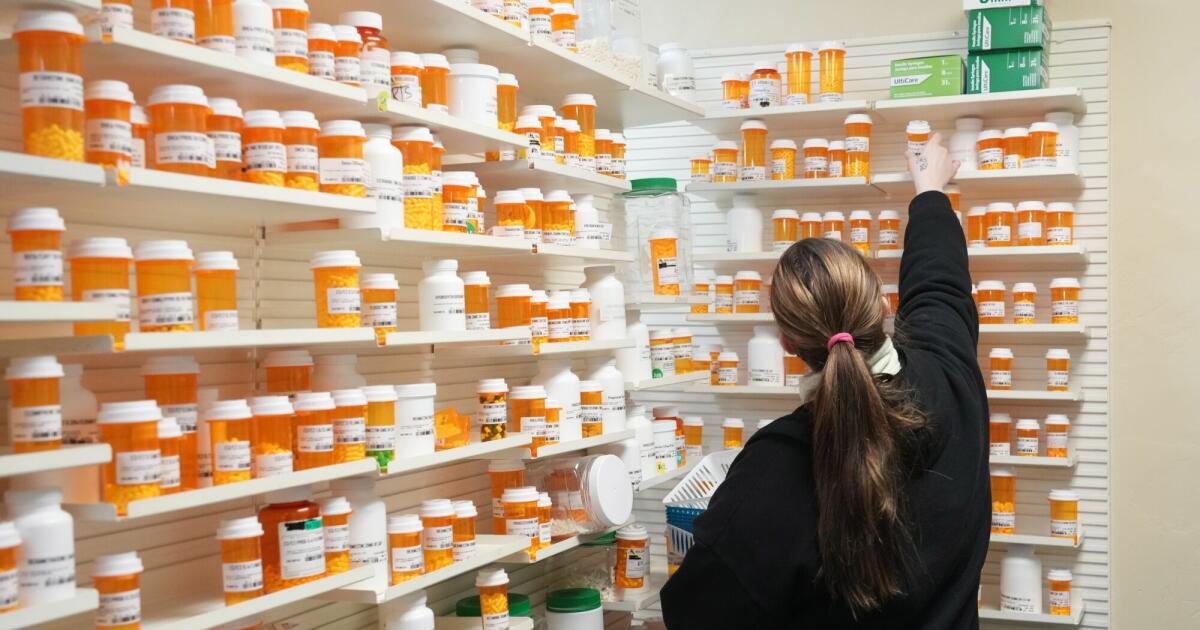
Generic drug manufacturers must move production to the U.S. or face a 100% import duty from August 2028, President Donald Trump said, threatening the supply of low-cost medicines that millions of Americans rely on.The move is aimed at “reshoring” generic pharmaceutical production in the US, and companies that don’t build plants onshore will face levies that would then double, to 200%, in August 2029, Trump said in a social media post.If imposed, the duty risks upending a global supply chain that keeps generic medicines affordable for Americans. These off-patent drugs run the gamut from everyday painkillers and antibiotics to cholesterol and cancer drugs, and they’re mostly produced at factories in India, Europe and China.It’s also unclear how forcing generics companies to make more medicines in the U.S. fits with Trump’s other goal of lowering drug prices there, given the lower cost of labor and manufacturing in places like India. That, along with the White House’s previous willingness to cut deals with drugmakers over patented medicines, suggests there could yet be wiggle room on the final levy.Chief Executive Officer Richard Saynor of Sandoz Group AG, one of the world’s largest generic producers, warned last year that America’s shift toward steep tariffs was likely to make drugs more expensive and limit access for patients. Sandoz shares fell as much as 4.2% in Zurich on Wednesday, the most since April. The Swiss company, which, like rivals Teva Pharmaceutical Industries Ltd. and Viatris Inc., copies branded medications once they lose patent protection, said it is too early to assess the implications of Trump’s move. “We share the goal of improving affordability and access to medicines in the United States,” it said in an emailed statement. “Generics and biosimilars already make a significant contribution to lowering healthcare costs and helping ensure patient access to treatment.”The planned tariffs would raise costs for manufacturers who already operate on thin margins, risking higher prices and potential shortages for the generic treatments that account for more than 90% of U.S. prescriptions.But shifting production to the U.S. would remove the cost advantage foreign generic producers have against branded drugmakers, forcing them to either raise prices or withdraw from the market, said Nathan Gray, senior research fellow at the Institute for International Trade at Adelaide University in Australia.“This decision will lead to reduced access to generic medicines in the U.S. because they won’t be able to make them as affordable,” Gray said. “It’ll push them into higher pricing. It’s likely to reduce competition and lead to consumers having to choose the name-brand medicines and not have the alternative for generics in the U.S. market.”Trump has seized on drug costs as a key driver of cost-of-living pressure ahead of the 2026 midterm elections this year. He has long complained about differences between what consumers pay in the U.S. compared to foreign markets, and has sought to cut that gap. The administration recently launched a direct-to-consumer discount drug sales platform it branded as TrumpRX.India HitYet unlike makers of innovative medicines under patent protection, generics producers compete on low pricing, making it far harder to absorb tariffs.Among the US’s trading partners, the hit would be most significant to India, which is the biggest exporter of generic medicines to the US. Pharmaceuticals are among India’s top three exports to America, totaling $10.5 billion in 2024-25, according to the country’s Commerce Ministry.Duties on drugs would leave over 40% of India’s exports to the U.S. adversely affected, adding to existing levies on steel, aluminum, and autos.The NSE Nifty Pharma index of 20 Indian drugmakers slipped as much as 1.9% in Mumbai trading Wednesday, with sector leader Sun Pharmaceutical Industries Ltd. also down up to 1.9%.Still, it was not immediately clear how much of Trump’s new tariff Indian drug companies will face: A trade pact struck by the two countries in February stipulated that India would “receive negotiated outcomes with respect to generic pharmaceuticals and ingredients.” Trump’s previous threats to impose tariffs on pharma imports put cheap supplies from India at risk, with commonly prescribed oral contraceptives, hypertension and depression treatments at the top of the list, according to an earlier Bloomberg News analysis of data provided by health care intelligence firm Symphony Health. In the case of birth control, roughly 65% of all pill prescriptions in the U.S. in 2024 were manufactured by just two India-based companies, Glenmark Pharmaceuticals Ltd. and Lupin Ltd., it found. The tariffs were “never expected,” said Vishal Manchanda, an analyst with Systematix Group who tracks the pharmaceutical industry.Long TimelineEstablishing a new manufacturing plant is a significant investment that would likely take at least three years to go live — longer than Trump’s tariff timeline, he said. Companies might look to dilute US revenue share and chase other markets, he added.While China exports only a small share of overall generics to the US, mainland manufacturers supply a significant portion of certain medicines like antibiotics, blood thinners and medications to prevent organ transplant rejections.Trump has also urged pharmaceutical companies to manufacture more of their patented medicines in the US, and in April 2025, his administration began a trade probe of the industry on national security grounds. The White House has repeatedly set delayed tariff implementation dates with a looming deadline of devastating consequence as a means of creating leverage for future deals with countries and companies alike. The U.S. administration also plans to seek tariffs of as much as 100% on certain patented medicines imported from overseas, though with several major exceptions. Most of the world’s biggest drugmakers, including Merck & Co. and Eli Lilly & Co., sidestepped the punitive moves by striking agreements with the administration.Separately, the White House has been working to replace Trump’s emergency duties after they were deemed unlawful by the Supreme Court earlier this year. An across-the-board rate of 10% is set to expire on Friday, and the administration is expected to impose levies on products from dozens of trading partners, citing what it said were lax forced-labor standards, before the end of the week.Tong and Curtis write for Bloomberg.