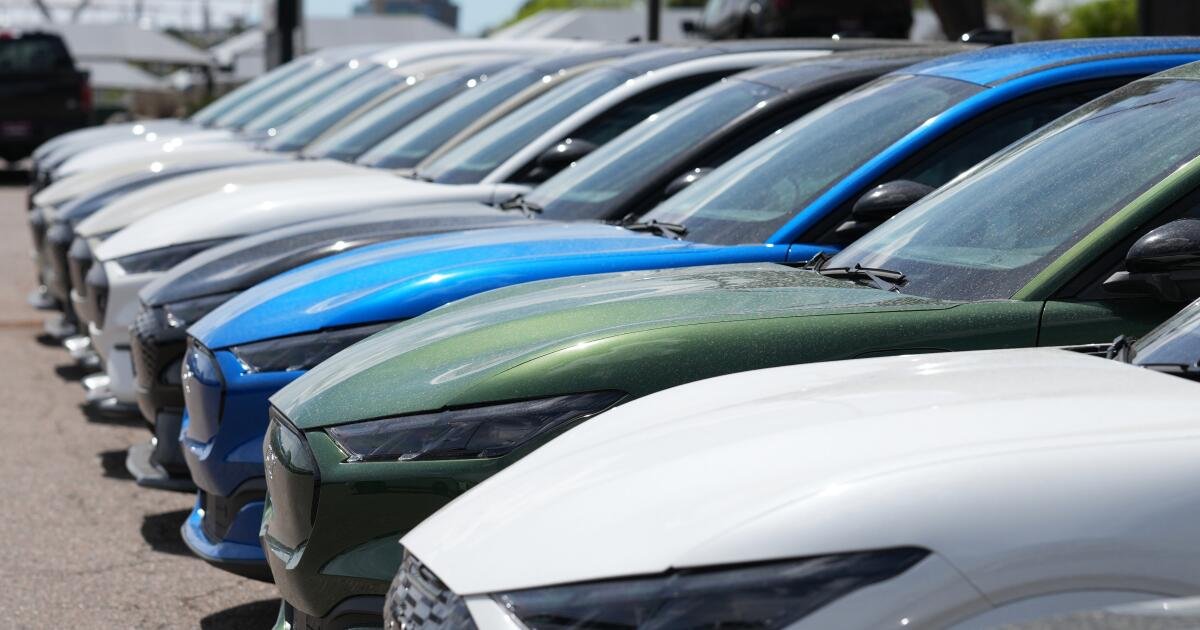
With gas prices remaining high due to the war in Iran, California officials are hoping a new rebate program for electric cars can make the math work for buyers at a time when federal incentives have gone away under the Trump administration.California has long been the leader in electric-vehicle adoption, which has continued this year despite the elimination of federal tax credits. The state is now poised to assist drivers with the purchase of their first new or used electric vehicle, starting next month.Experts say the program is meant to provide a shot in the arm for EV sales in the state but might not move the needle much at a time when the supply of electric vehicles is low nationwide. EV prices remain higher in general than gas-powered cars, and that price has been a barrier to new adoption to those with low or moderate incomes.This month, the California Energy Commission announced that during the second quarter of the fiscal year, April through June, Californians purchased 86,857 new zero-emission vehicles — 75,597 bought EVs, 81 purchased hydrogen fuel-cell vehicles, and 11,179 people bought plug-in hybrids. This represents 19.1% of new-car sales in the state and a 3.3 point jump over the first quarter, the strongest EV share ever recorded without a federal tax credit, said Gil Tal, director of the Electric Vehicle Research Center with UC Davis. “At $5.77 a gallon, the operating-cost math swings decisively to the EV, about $125 a month for a typical driver, and buyers acted on that price signal within weeks,” he said.When the Trump administration ended the $7,500 federal tax incentive for new electric vehicles in September, Tal said, the percentage of new electric vehicles sold or registered in the state fell to 15.8% in the first three months of the year, its lowest since 2021. The reported rebound comes at a time when gas prices are soaring well above the national average in California a result of the U.S. and Israel’s war with Iran. The commission and Gov. Gavin Newsom point to gas price volatility as one reason why so many Californians decided to turn in their gasoline-powered vehicles for electric ones. “While Donald Trump makes Americans pay the bill for his Iran war at the pump, California is giving families the freedom to choose a cheaper way forward by going electric,” Newsom said in a statement. But, Tal noted, the whole automotive market tends to trend upward every spring, so the sale of EV units rose with it. Regardless, California’s latest push toward getting more EVs on the road is the MyFirstEV instant rebate program, which will knock $3,500 off the purchase price of a new EV and $1,750 off a used model. It’s an important incentive to get people into their first electric vehicle, and it continues to support the state’s transition to zero-emission vehicles, said Jeremy Michalek, director of the Vehicle Electrification Group, a research group at Carnegie Mellon University. But one roadblock consumers may face is a lack of EVs in the dealership lot. “We have no supply because we have no regulation that forces supply,” Tal said. “The federal government dismantled everything that was creating the supply, and the car companies started to announce backpedaling, undoing things, and we lost a lot of the supply.” Last year, the U.S. Senate revoked California’s clean-car mandate waivers — including a rule that would have effectively banned the sale of new gas-powered cars by 2035.The state is currently fighting the action, which removed the pressure on automakers to sell EVs within the state. Another wrinkle is how likely consumers are to purchase an EV. Even though consumer spending on the vehicles has ramped up, Michalek said, “it’s not that people started liking electric vehicles more. … It’s because electric vehicles kept getting better and cheaper.” Ultimately the program will have a couple of effects on the EV landscape in California, Michalek said. By incentivizing the purchase of a new electric vehicle, that will encourage new production, which means more EVs on the road.Secondly, the used-EV incentive will allow some consumers to go electric who couldn’t afford to do so before. However, incentivizing buying used EVs doesn’t result in new production, he noted: “That’s just a change of hands.” But by supporting both new and used EVs, it lessens equity concerns — that only people with higher incomes are able to take advantage of the program, Michalek said. How the MyFirstEV program worksNewsom signed Senate Bill 168 into law this month allocating $135 million for the MyFirstEV program; the funding will be matched by 13 major automakers combined. Through this program, eligible buyers will get an instant discount when purchasing a new or used electric vehicle — a major difference from the federal incentive that required that buyers apply for the credit after the purchase. Eligibility is open to all Californians buying or leasing their first EV — this is confirmed through a buyer’s attestation. Not all electric vehicles qualify for the rebate. It only pertains to new EVs with a manufacturer’s suggested retail price of $50,000 or less and used EVs sold through a manufacturer’s pre-owned vehicle program at $25,000 or less. There is one exception to the vehicle eligibility rule: EVs sold from a company with headquarters in California can claim the discount regardless of the vehicle price. Companies include Newark-based Lucid and Irvine-based Rivian. Which automakers are participating in the programThe automakers that are participating in the program include: FordGeneral MotorsHondaHyundaiKia LucidMitsubishi Nissan Rivian Subaru TeslaToyotaVolvo