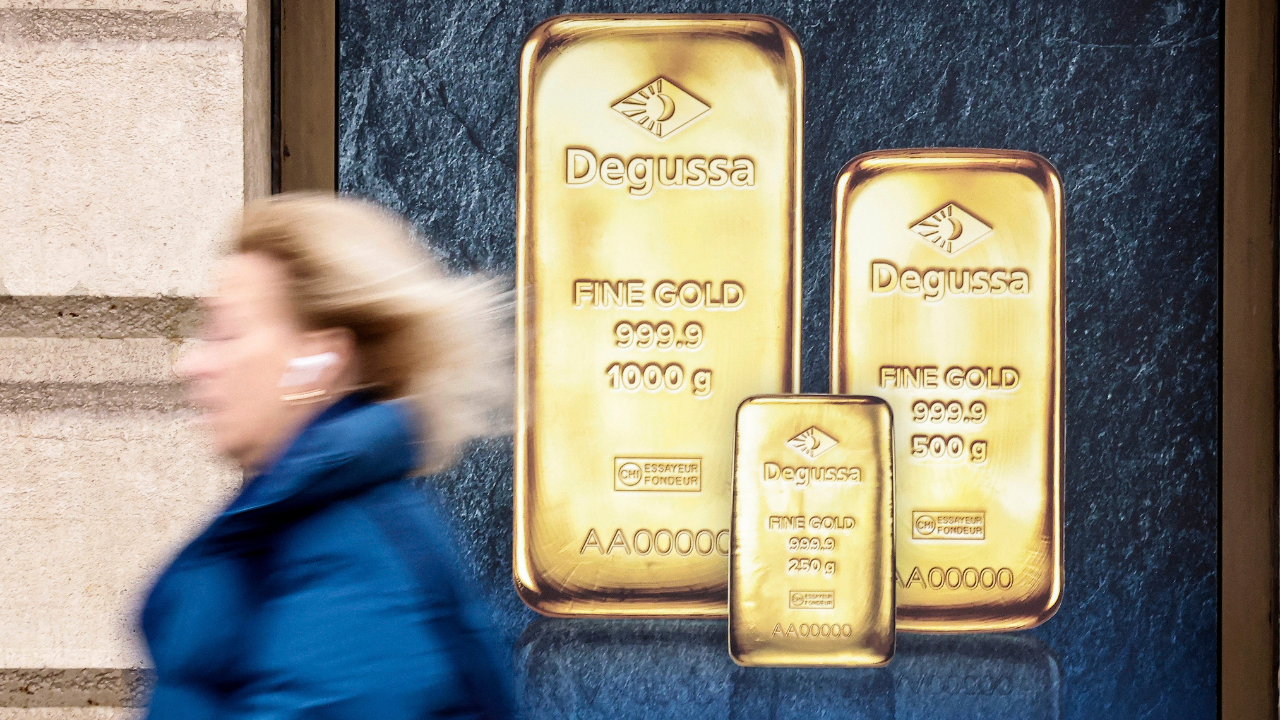
NYPD warns of rising gold scams targeting seniors after victims lose millions NYPD warns of a devastating gold scam targeting seniors after victims lose millions of dollars. Fox News’ Nate Foy outlines how scammers pose as government agencies to coerce elderly victims into liquidating their assets into untraceable gold bars. Authorities report over $100 million stolen in New York City alone, with one victim losing $9 million. NEWYou can now listen to Fox News articles!
As wars spread, trade tensions escalate and inflation remains stubbornly high, governments around the world are quietly buying more gold, a sign many are preparing for a future they believe will be more uncertain.A new World Gold Council survey found that 89% of central banks expect global gold reserves to grow over the next year, while a record 45% plan to add to their own holdings. Central banks are the institutions that manage a country’s money and financial reserves.For everyday Americans worried about rising prices, growing government debt and what comes next for the economy, the trend is worth paying attention to.A SINGLE TRUMP ANNOUNCEMENT SPARKS BILLIONS IN LOSSES ACROSS GOLD AND SILVERSome experts say central banks buying more gold is a sign they expect today’s economic and geopolitical uncertainty to stick around.That’s because gold has long been considered a safe place to put money during wars, market turmoil and periods of high inflation, because it isn’t tied to the economy or policies of any one country.Why governments are buying gold Gold has long been viewed as a safe-haven asset during periods of war, inflation and market volatility because, unlike currencies or government debt, it isn’t tied to the financial health of any single country. (Matt Jelonek/Bloomberg/Getty Images)For decades, central banks have invested heavily in U.S. Treasuries — government debt backed by the U.S. and considered among the world’s safest investments.But Cavatoni said many countries are now adding gold because they want another layer of protection against inflation, global instability and economic turmoil.WHAT TRUMP’S NEXT PICK TO LEAD THE FEDERAL RESERVE MEANS FOR YOUR WALLET”They’re looking at diversifying,” Cavatoni said. “And gold fills that need because it provides liquidity, diversification and protection against inflation and geopolitical uncertainty.”The World Gold Council survey backs that up.About 90% of central banks said gold’s performance during times of crisis is one of the main reasons they hold it. Another 84% cited its role as a long-term store of value and inflation hedge, while 83% said it helps diversify their reserves.Those reasons have fueled a global buying spree.Who’s buying? A person walks past a poster showing “American Eagle” gold and silver bullion coins at a gold dealer’s window in Madrid, on January 30, 2026. (Oscar Del Pozo/AFP/Getty Images)While China has received much of the attention, it isn’t alone. Central banks around the world have been steadily increasing their gold reserves.According to Cavatoni, Poland, Uzbekistan, Kazakhstan, the Czech Republic, Chile, Jordan and Ghana have also been among this year’s biggest buyers.While the United States still owns more gold than any other country, much of today’s buying is coming from developing economies looking to rely less on foreign currencies they don’t control.”The U.S. has no natural need to continue to accumulate more reserves in the form of gold,” Cavatoni said.The survey also found that nearly three-quarters, or about 74%, of central banks expect the U.S. dollar’s share of global reserves to be lower five years from now, while they expect gold’s share to increase.What does this mean for everyday people? Gold is often viewed as a financial safe haven because, unlike currencies or government debt, it isn’t tied to the economy or policies of any one country. (Michael Nagle/Bloomberg/Getty Images)The same concerns driving governments to buy gold are also attracting individual investors.One trend that surprised Cavatoni is that even with gold trading near record highs, people aren’t rushing to sell.”It tells me a couple of key things,” Cavatoni said. “People are less likely to let go of their gold.”For everyday investors, the trend doesn’t necessarily mean they should rush out and buy gold. But it does offer a window into how some of the world’s largest financial institutions are preparing for uncertainty, with central banks placing greater value on diversification and protection against economic and geopolitical risks.CLICK HERE TO DOWNLOAD THE FOX NEWS APPAnd individual investors appear to be showing a similar mindset.Instead of cashing in, both investors and many central banks are holding on to or building their gold positions, a sign that they see gold less as a short-term investment and more as long-term financial insurance in an increasingly unpredictable world. Amanda Macias covers the intersection of business, economics and politics, with a focus on how policy decisions shape markets, businesses and American workers.