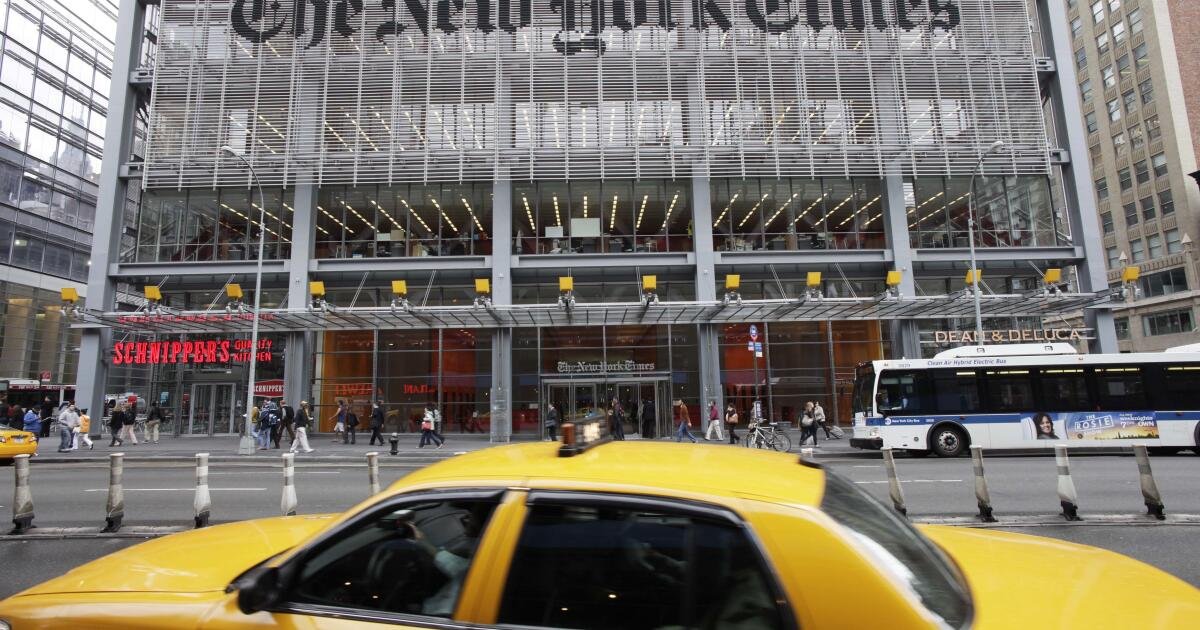
Last week, the U.S. Department of Justice withdrew subpoenas that would have required reporters from the New York Times to turn over phone records and testify in court about their sources on security concerns related to President Trump’s new Air Force One. The move came during a hearing in which a federal judge sharply criticized the department for violating its own rules limiting prosecutors’ use of subpoenas and other tools to demand information from journalists.While the withdrawal of the subpoenas is certainly welcome news, it doesn’t erase the damage that has already been done.It’s troubling enough that the federal government issued these subpoenas at all. What’s worse is the way in which they did it: by showing up on reporters’ doorsteps.Indeed, armed FBI agents served the subpoenas at the homes of three Times reporters, including one who, according to NPR, was “watching the new movie The Sheep Detectives with his elder son” when they arrived.It’s not the first time that the Trump administration has sent government agents to reporters’ residences. Earlier this year, the FBI executed a search warrant at the home of Washington Post reporter Hannah Natanson and seized her electronic devices as part of an investigation into a government contractor.Government searches, subpoenas and other legal demands targeting journalists’ materials, sources and communications represent extraordinary government overreach. That these incidents both involved armed federal agents showing up at the homes of reporters signals a systemic, intentional effort to intimidate the press.The decision by the Justice Department and the FBI to serve subpoenas at the homes of reporters instead of to their lawyers is not appropriate.Both the New York Times and the Washington Post are represented by legal counsel. In addition to in-house newsroom lawyers, they retain outside law firms for any number of issues that arise in the course of news operations. These are well-known facts, and certainly the Department of Justice is intimately familiar with those relationships — because both newsrooms are in court challenging government policies and actions.The Post challenged a similar subpoena issued to national security reporter Ellen Nakashima, which the government withdrew after a court hearing. And the Times has successfully challenged the Pentagon’s onerous credentialing policy, which led virtually the entire Pentagon press corps to give up access to the building rather than agree to the policy.Moreover, Justice Department policy requires advance negotiation in investigations that may involve reporters. As such, and at a minimum, the government should have reached out to lawyers for the outlets and sought an agreement that would have avoided armed agents showing up at the reporters’ doors. The relevant criminal rule also permits service by anyone over the age of 18; the government could have used a private process server if for some reason it seemed necessary to give subpoenas to the reporters at their homes.The heavy-handed tactics of sending armed agents to homes are chilling. They seem aimed at instilling fear in both the reporters who are doggedly pursuing stories in the public interest and the sources who are shining a light on things the public needs to know. The message it sends is that the government is always watching, and that if you report things the administration doesn’t like, agents will come after you and your families.The details reported by the Times about Trump’s new Air Force One, which was given to the president by the Qatari government, are of significant public interest. As the Times reported, the plane lacks certain anti-missile defense systems, making it risky for international travel.U.S. taxpayers have already poured hundreds of millions into retrofitting the donated plane, with no clear accounting for how any of it is being spent. Dozens of people travel on Air Force One with the president and rely on the government for their safety and security. That the Secret Service raised serious concerns about the plane’s fitness to carry the president, crew, security, staff and press is clearly in the public interest.The government’s response sent a dangerous message that it will go to extremes to silence reporting that it dislikes. That will almost certainly come at a cost to the American public — which may remain in the dark about future misconduct by officials and threats to the nation.Gabe Rottman is the vice president of policy at the Reporters Committee for Freedom of the Press. Insights L.A. Times Insights delivers AI-generated analysis on Voices content to offer all points of view. Insights does not appear on any news articles. Viewpoint This article generally aligns with a Center Left point of view. Learn more about this AI-generated analysis Perspectives The following AI-generated content is powered by Perplexity. The Los Angeles Times editorial staff does not create or edit the content. Ideas expressed in the pieceThe article argues that the Justice Department’s use of armed FBI agents to serve subpoenas at the homes of New York Times reporters represents an extraordinary and inappropriate escalation in leak investigations, violating departmental rules meant to limit legal demands on journalists and protect press freedom.[1][2][4][6]It contends that delivering grand jury subpoenas to reporters at their residences, rather than to the well-known lawyers representing The New York Times and The Washington Post, is a deliberate choice that heightens intimidation, especially given that ordinary service rules would have allowed use of a non‑law‑enforcement process server instead.[2][4][6][17][18]The piece stresses that these tactics are part of a broader pattern, linking the home service of subpoenas to the unprecedented FBI search of Washington Post reporter Hannah Natanson’s home, where agents seized phones, laptops and other devices in a national security leak investigation, a move press‑freedom advocates say violates the First Amendment, the Fourth Amendment and the Privacy Protection Act and chills reporting.[7][14][15][20][21]It further highlights that Justice Department guidelines traditionally require advance negotiation and careful consideration before subpoenas or searches directed at journalists, and argues that bypassing those safeguards—by sending armed agents to private homes—signals a systemic, intentional effort to intimidate the press rather than a good‑faith application of policy.[4][14][15][20]The article emphasizes the chilling effect of such heavy‑handed measures, noting that when federal agents show up at reporters’ doors or raid their homes, both journalists and potential whistle‑blowers may reasonably fear that aggressive law‑enforcement scrutiny will follow any reporting that angers the administration, thereby deterring sources from exposing wrongdoing.[6][13][16][20][21]It underscores that the New York Times reporting at issue concerned serious, legitimate matters of public interest: security flaws in President Trump’s new, Qatari‑gifted Air Force One, including the lack of advanced antimissile systems and significant, poorly explained taxpayer spending on retrofitting the plane, as well as Secret Service concerns about its suitability for presidential travel.[1][2][3][6][17][19]The piece suggests that using subpoenas and raids to go after journalists over such reporting sends a dangerous signal that the government will “go to extremes” to suppress coverage it dislikes, and warns that the result will be less transparency about future misconduct or security failures that the public has a right to understand.[6][13][17][18][19][20]Finally, it situates these events within a wider deterioration of press protections in the United States, echoing concerns from organizations like the Reporters Committee for Freedom of the Press and the Committee to Protect Journalists that recent arrests, raids and legal demands reflect a broader threat to the First Amendment and to the role of the press in holding government accountable.[13][14][20][21]Different views on the topicIn contrast, the Justice Department has repeatedly argued that these subpoenas and searches are driven by national security concerns and are aimed at identifying government officials who leaked classified information, insisting that “reporters are not the targets; those leaking classified information are,” and that investigators cannot simply ignore potential crimes involving sensitive defense information.[2][4][6][7][10][12][15][17][21]Officials have maintained that subpoenas for journalists’ testimony and phone records are issued “in full compliance with federal law and internal Department policy,” portraying them as lawful tools that prosecutors are obliged to use when serious breaches of classified information occur, especially in cases involving presidential security and wartime operations.[2][4][6][7][10][15][17]Acting and former Justice Department leaders have framed the disclosure of sensitive details—such as the capabilities of the new Air Force One or classified assessments of the Iran war—as posing grave risks to national security and to U.S. personnel, arguing that aggressive leak investigations, including subpoenas and even search warrants, are necessary to deter future illegal disclosures.[1][2][5][15][17][19][21]Attorney General Pam Bondi, explaining the FBI raid on Hannah Natanson’s home, said the search was conducted at the request of the Defense Department because the reporter was “obtaining and reporting classified and illegally leaked information from a Pentagon contractor,” and asserted that the administration “will [not] tolerate illegal” handling of classified materials that endanger the nation and its military.[15][21]Supporters of the government’s position note that there is no federal shield law granting reporters absolute protection from subpoenas, and contend that, while guidelines exist, prosecutors must retain the ability to seek journalists’ records or testimony in exceptional circumstances where leaks involve national defense information and traditional investigative avenues have been exhausted.[4][7][10][14][15][17]Justice Department statements also suggest that the withdrawal of several subpoenas—after court hearings and objections from news organizations—demonstrates that internal and judicial checks are functioning, with prosecutors adjusting course when concerns are raised, rather than mounting an unchecked campaign against the press.[1][3][6][7][8][9][10][11]Some law‑enforcement and government representatives have implied that the presence of armed agents at reporters’ homes reflects standard FBI operating procedures for serving legal process and executing search warrants, rather than a special effort to intimidate, and that such measures are used across investigations involving classified material, not unique to journalists.[1][2][7][15][17]Additionally, officials point to the Justice Department’s public acknowledgments of “tension” between press freedom and national security, arguing that while they “value the critical role of the press,” they also have a “vital responsibility” to ensure that those entrusted with the nation’s secrets follow the law, even when that means pursuing leak probes that may be unpopular with media organizations.[2][4][6][12][17]