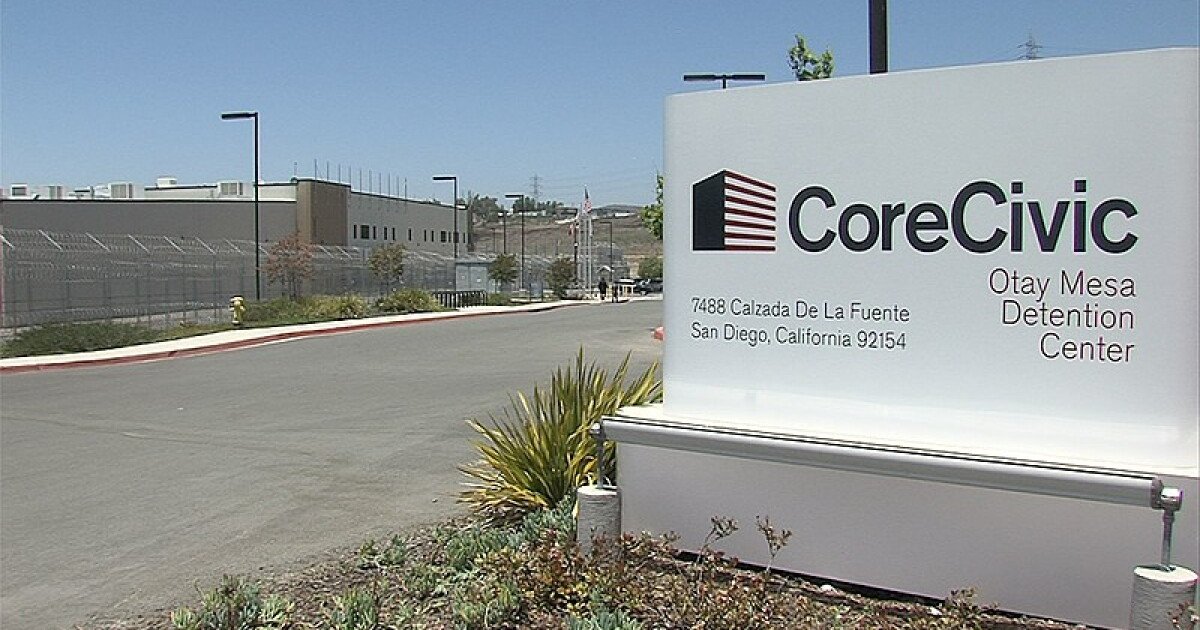
There’s a 24-hour clock when it comes to suspected or confirmed cases of active tuberculosis, or TB.San Diego County requires those cases to be reported within that window.But during a June 12 inspection, officials found that two tuberculosis cases had not been reported by the facility’s medical staff. Instead, the county learned about them through a medical testing vendor.The facility took several weeks to cooperate with the county’s communicable disease investigation, according to a report the county published on its findings this week.“We do not believe any detainee is currently at risk of TB exposure from the cases that (the San Diego County Department of) Public Health was made aware of,” the county said in response to questions from KPBS.Tuberculosis is airborne.“Which means, every time you cough, or even talking, it causes the particles to go in the air, and the mycobacteria to go, and that’s how it spreads,” said Dr. Annie Cowell, an infectious disease specialist at UC San Diego.That’s why reporting on time is important, she said.“So every time a case is reported, the county comes in, and they see … who was in close contact with this person over time,” Cowell said.The risk of transmission is higher in close, congregate settings like detention facilities, Cowell said.The county said the risk associated with the two cases was low.“If you have a lower burden of infection, then you’ll have lower amount of the mycobacteria that are in the lungs, and so less risk to spread to others,” Cowell said.The tuberculosis reporting issue was one of several concerns identified during the eight-hour inspection on June 12.Inspectors also found that the facility had no vaccines available on site. The county said having routine adult vaccinations available is important for preventing the spread of communicable illnesses, including flu.One detainee had not received a needed medical device 18 months after admission, the county report said.The county recommended that the facility improve communication during communicable disease investigations and provide recommended vaccinations and medical devices in a timely manner. The facility is not required to follow those recommendations.At the time of the inspection, the Otay Mesa Detention Center was operated by CoreCivic, a private company that runs detention facilities under government contracts. It has since been sold to the U.S. Department of Homeland Security.In a statement to KPBS, CoreCivic said it takes its obligations under federal detention standards seriously and that the facility has “protocols to identify, isolate, monitor and treat people with suspected or confirmed communicable diseases.”“While inspectors identified concerns related to responsiveness in certain interactions with public health officials, those findings involve process improvements rather than a lack of clinical care,” CoreCivic said.The company said it has reviewed the recommendations with facility leadership and health care staff and “reinforced procedures to support timely communication, transparency, and continued collaboration with public health authorities.”The county will send the inspection findings to the California Department of Public Health, California Attorney General Rob Bonta and the county’s congressional delegation.The county said it intends to seek annual inspections of the facility.