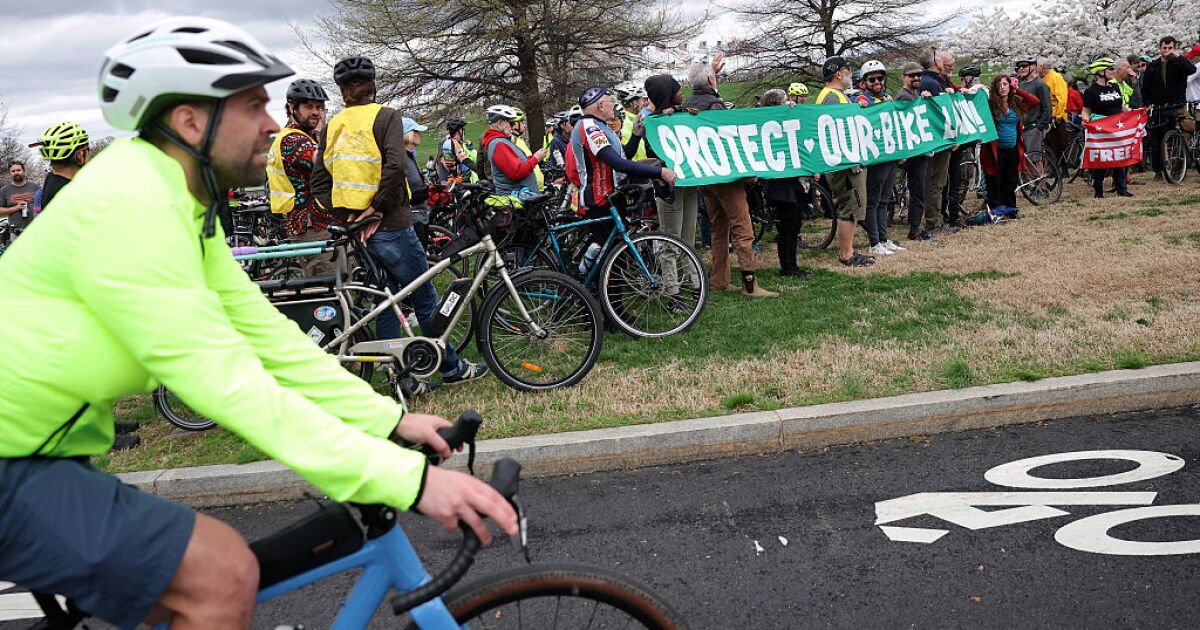
WASHINGTON — In the two weeks since Transportation Secretary Sean Duffy vowed to end support for “DEI bike lanes,” a growing list of bike-related safety materials have disappeared from the Federal Highway Administration’s website.
Even agency staff have been left guessing about why, said a person who works in web support for agencies at the Department of Transportation. They requested anonymity because they fear retribution for speaking publicly.
The person said FHWA staff have been asked to find, and in some cases take down, any references to bikes and bike lanes.
“Why do you need to take down bicycle safety, of all things?,” they told NPR.
“We’re not making the sites better, faster or quicker, you know, able to provide real information to the communities that use these resources,” they said. “It’s asinine.”
Questions remain over Trump administration’s review of safety resources
Federal transportation officials have pulled down or edited dozens of pages of safety resources in the past week, according to an analysis by the Internet Archive Wayback Machine and internal FHWA emails obtained by NPR.
While there has been no official explanation, the changes appear to be part of a broader push to find and remove road safety materials from the FHWA website.
Earlier this month, the FHWA quietly removed a set of recommendations — including bike lanes and speed cameras — from a list of “Proven Safety Countermeasures” that have been vetted by agency staff and shown to improve road safety.
A DOT spokesperson told NPR in an emailed statement on Wednesday that the department “continuously reviews its policies to ensure each promotes safety, efficiency, and common sense.”
“Since nearly 80% of the population uses cars to get to work and their important medical appointments, we are taking a closer look at federal guidance to ensure American families have the infrastructure they need,” the spokesperson said. “This is a common sense approach despite the Left’s belief that everyone should ride a bike to their shoebox-sized apartment to eat crickets to achieve a phony climate agenda.”
But safety advocates warn that the Trump administration is undermining proven measures for reducing roadway crashes and fatalities, including some that date back decades.
One of the safety tools that has been taken down is known as the Pedestrian and Bicycle Crash Analysis Tool, or PBCAT. As of Wednesday, a link to the page that formerly hosted the tool on the FHWA website was dead.
The tool is designed to capture detailed information about crashes involving cars, bicycles and pedestrians, including what combinations of vehicle maneuvers and roadway conditions led to the crash, which can help planners and safety advocates develop countermeasures to prevent similar crashes.
“That’s really important because it helps us do a better job of tracking pedestrian and bicyclist fatalities across the nation,” said David Harkey, who was the lead researcher on the project that initially developed the tool at the University of North Carolina’s Highway Safety Research Center.
Today, Harkey is the president of the Insurance Institute for Highway Safety (IIHS), a nonprofit organization funded by the auto insurance industry that works to reduce motor vehicle crash fatalities and injuries.
Harkey told NPR he’s disappointed by the decision to remove the tool from the FHWA’s web site.
“This is an agency that claims that safety is a priority for them,” he said. “It’s important that proven tools and resources like PBCAT are there on their site and are available for safety professionals across the country.”
Local and state officials may still be able to make use of PBCAT even if it’s not publicly available on the FHWA website, Harkey said, because it’s already embedded in the way they track crashes. Still, he would prefer the tool to be widely available from FHWA.
Based on his organization’s conversations with FHWA staff, Harkey says the web tool remains “under review,” though he said the details are murky.
“It’s not clear to us what is being reviewed, what the criteria are, what they are looking for,” Harkey said. “Hopefully this review will get completed sooner rather than later.”
But Harkey isn’t optimistic. He says the FHWA pulled down another critical safety tool — a database known as the Highway Safety Information System — 18 months ago. It still hasn’t been restored.
“That’s one of the frightening things about this process,” Harkey said. “We’ve heard the same story that things are under review, and that once that review is completed, they hope to be able to put it back up. But we haven’t seen that.”
Andrew Harnik
/
Getty ImagesTransportation Secretary Sean Duffy speaks during a Freedom 250 Grand Prix showcase in Washington earlier this month.
DOT staff are told to remove bike safety language 2 days after Duffy’s ‘DEI’ post
Neither the FHWA nor the Transportation Department responded to questions about the criteria for the review, or how long it would take.
But an FHWA internal email seen by NPR provides a clearer picture of when the removal of bike- and safety-related materials from the FWHA website began.
Earlier this month, DOT announced more than $1.7 billion in discretionary grants that did not include funding for bike lanes or pedestrian projects. The Biden administration, by contrast, had used the same program to fund hundreds of millions of dollars in bike lanes and trails nationwide, along with other road and infrastructure projects.
“We’re proud to support these great projects that will improve infrastructure, strengthen supply chains, make us safer, advance equity, and combat climate change,” said then-Transportation Secretary Pete Buttigieg when he announced the grants in 2021.
Secretary Duffy said in a July 7 post on X that the Biden administration “used YOUR MONEY for DEI bike lanes and climate change. THAT’S OVER.”
In response, critics noted that FHWA had previously acknowledged that bicycle lanes can make roads safer for all users.
But on July 9, a staffer in the FHWA’s safety office sent an email with the subject line, “URGENT ACTION: Update Website,” directing staff to remove that language from the website.
Specifically, the email directed staff to make significant changes to the list of “Proven Safety Countermeasures,” as they’re known, that have been shown to reduce crashes and save lives. “We received an urgent request from leadership to update web content in alignment with administration direction,” the sender wrote, requesting that references to bike lanes, speed cameras and several other strategies related to speed be stripped from the list.
Safety advocates say it’s normal for funding priorities to shift from one administration to another. But many say they’re troubled by the push to remove evidence-based safety measures from DOT websites.
The person who works in web support for DOT agencies shares that concern.
“Okay, got it. No more grants,” they said. “But why does that mean I need to take down content? Like, Pedestrian Bicycle Crash Analysis Tool — who did it ever hurt, you know?”
More than 36,000 people were killed on U.S. roads last year. That number has been trending down since 2021, and the crash fatality rate in the U.S. is near an all-time low. Still, crash and fatality rates here remain far higher than in other developed countries.
The 2025 total includes more than 6,700 pedestrians and bicyclists who were killed.
“Safety involves everyone on the roadway,” said IIHS president Harkey. “So if you really, truly believe as an agency that your job is to make sure safety is a priority, then you cannot remove tools and resources that are there to help you address those 20% of the fatalities on our roadways.”
Copyright 2026 NPR