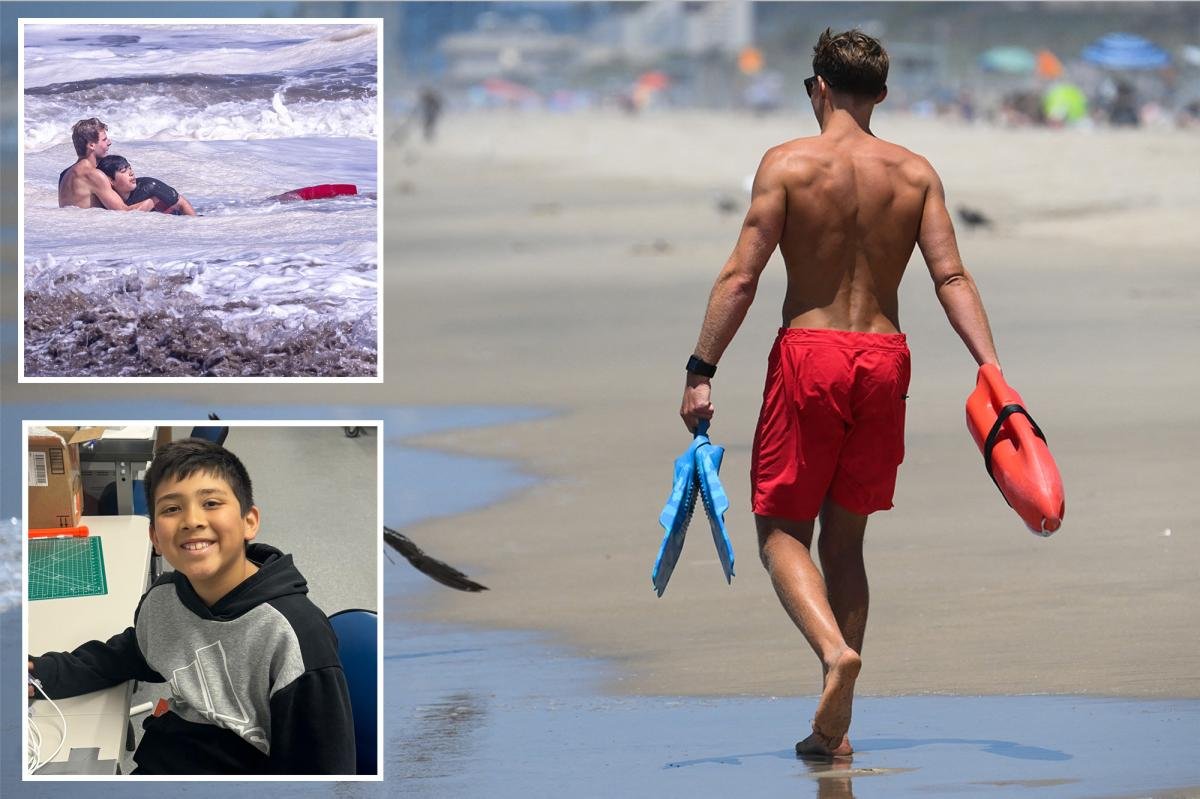
California doesn’t recognize lifeguards as first responders. But last month’s heroic rescue by 16-year-old California rookie lifeguard Ryder Williams is a reminder of why that needs to change.
“I wasn’t going to let go of that kid. He was going to drown, and I wasn’t going to let that happen,” Williams later told his father, after pulling an unconscious 10-year-old boy from the rough surf at Seabright State Beach in Santa Cruz on July 25 — World Drowning Prevention Day. Video of the rescue went viral, drawing national attention.
Williams, a California State Parks lifeguard, was on duty when Nathaniel Rai, wading in ankle-deep water, was swept into the ocean by a wave. Williams rushed into the water, grabbed hold of the boy, and held on through wave after wave and pounding surf until a fellow lifeguard arrived and helped pull them both to shore.
“I wasn’t going to let go of that kid. He was going to drown, and I wasn’t going to let that happen,” Williams later told his father, after pulling an unconscious 10-year-old boy from the rough surf at Seabright State Beach in Santa Cruz on July 25 — World Drowning Prevention Day. Video of the rescue went viral, drawing national attention. Instagram/@Santacruznow
Los Angeles County Lifeguard Maximus Oberto carries a rescue can while patrolling the shoreline and monitoring swimmers in the Pacific Ocean in Manhattan Beach, California AFP via Getty Images
After decades of decline, drownings in the US have risen to roughly 4,500 a year since the pandemic, up from about 4,000, even as America faces a persistent lifeguard shortage.
In the US, drowning remains the leading cause of death for children ages 1-4 and the second leading cause of unintentional injury death for children ages 5-14. Black children drown at disproportionately higher rates than white children due to historic inequities in access to swimming pools and swim lessons.
This summer has seen an increase in child drownings nationwide. Florida, which regularly leads the country in child drownings, has reported 87 fatalities so far this year and is on pace to surpass last year’s record total of 120, according to state data.
Sign up for the California Morning Report newsletter
California’s top news, sports and entertainment delivered to your inbox every day.
Thanks for signing up!
Most child drownings occur during non-swim time, when a child is not expected to be in or near water and is unsupervised.
Nathaniel Rai is alive today because a lifeguard, Ryder Williams, was guarding that stretch of beach — sparing his parents the devastating pain of losing a child.
That’s the difference a lifeguard makes. It underscores the critical need for safe, supervised swimming areas — and a shortage that leaves too many pools, beaches and waterways unprotected.
Most child drownings occur during non-swim time, when a child is not expected to be in or near water and is unsupervised. Instagram/@Santacruznow
Cities, towns, and municipalities across the country continue to struggle to recruit lifeguards. According to a 2026 Aquatic Trends Report, 38% of aquatic facilities nationwide experienced staffing challenges last year. That leaves too many people swimming at their own risk.
The fix isn’t complicated, but it takes investment. That means increasing pay rates so lifeguarding pays what the job is worth. And it means professionalizing the field: stronger training standards, real career pathways into aquatics management or EMT work and treating the job like the life-or-death work it is.
Williams’ rescue has added momentum to ongoing efforts at both the state and federal levels, including proposed legislation, to designate California’s open-water lifeguards formally as first responders.
This undated photo shows Nathaniel, 10, who was rescued by a teen lifeguard on Saturday, July 25, 2026, in Santa Cruz. (Sumit Rai) Sumit Rai via AP
While lifeguards in many California cities, counties and agencies already serve as first responders within local fire departments, the state has never made that status official. At its core, it’s about ensuring lifeguards receive the recognition, support and resources their work already demands –– the kind of foundation that empowers guards like Williams to rise to the moment.
Hawaii and New Jersey have already made the designation official. California, and every other state, should follow. Doing so isn’t just a matter of respect — it helps with recruitment and retention.
Ben Carlson knew that risk. The Newport Beach lifeguard died in 2014 rescuing a distressed swimmer in dangerous surf. The Ben Carlson Memorial & Scholarship Foundation, founded in his memory, has since funded lifeguard scholarships and helped establish the California Water Safety Coalition.
Carlson’s legacy is a reminder of what’s at stake every time a lifeguard enters the water — and why lifeguards like Williams deserve the investment this profession demands.
“This is my job and I love what I do,” Williams said, reflecting on the now-viral rescue. Just another shift, for a job that saves lives. That’s the work. It’s time we treated it that way.
Karen Cohn is co-founder of The ZAC Foundation, a national water safety nonprofit.
Download The California Post App, follow us on social, and subscribe to our newsletters
California Post News: Facebook, Instagram, TikTok, X, YouTube, WhatsApp, LinkedInCalifornia Post Sports Facebook, Instagram, TikTok, YouTube, XCalifornia Post Opinion California Post Newsletters: Sign up here!California Post App: Download here!Home delivery: Sign up here!Page Six Hollywood: Sign up here!