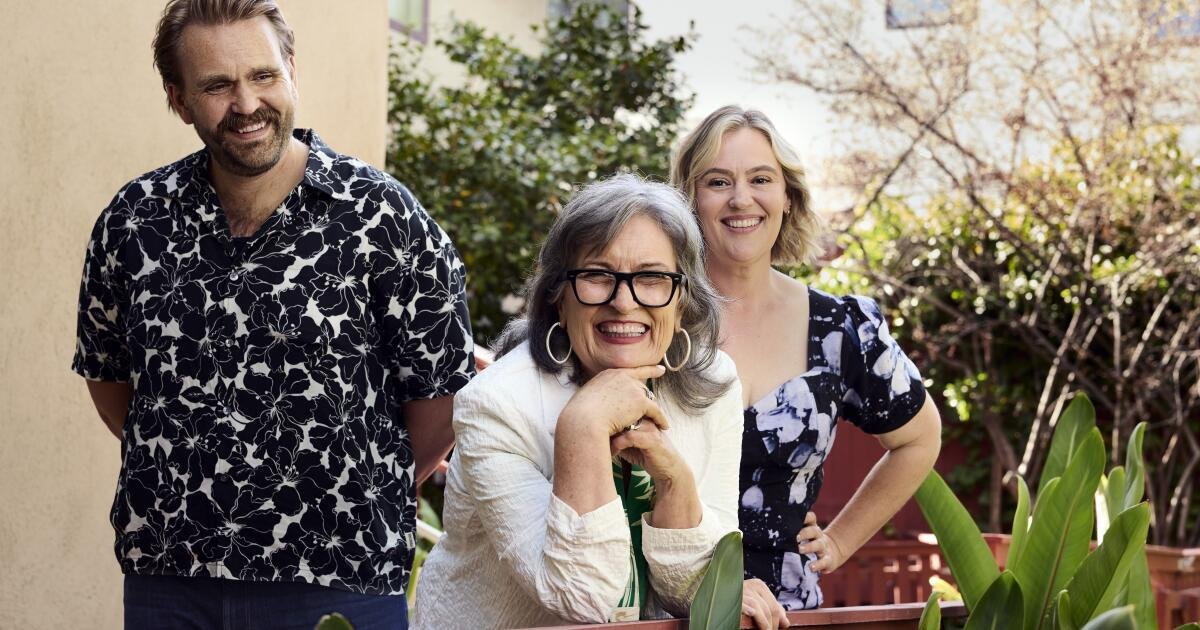
Rosemary Candy married John Candy all the way back in 1979, but even she learned something new about her late husband in the documentary “John Candy: I Like Me.” In an archived TV interview, John said he didn’t think his blind date initially liked him, adding, “But I was going to show her — ‘How dare you not like me?’”Rosemary, in her first interview for the Emmy-nominated Prime Video documentary, confessed she had never seen this before the film. “It was so funny, this idea of ‘I don’t think she liked me, but I was going to make her like me,’” she said. “As soon as I started to get to know him, I was head over heels for him.”As was the world. The star of “Uncle Buck” and “SCTV” was so beloved that the film’s director, Colin Hanks, was concerned that too many people would want to participate. Ontario-born Candy was such an icon that when the film was selected to open last year’s Toronto International Film Festival, Canadian Prime Minister Mark Carney made a surprise appearance to introduce it. To put it in terms Angelenos will appreciate: He was so legendary that during his funeral procession, the LAPD and California Highway Patrol shut down portions of the 405 Freeway.Candy died of a heart attack in March 1994, at 43; the service was held just around the corner from his Brentwood home, where Rosemary still resides and her late husband’s presence still fills the house. Personal photos are displayed throughout, his beloved leather-bound books fill the library, and a wide range of memorabilia occupies the office. But the largest reminder of his legacy are his children, Chris Candy and Jennifer Candy-Sullivan, who not only bear a striking resemblance to their parents, but also exude their warmth and spirit. The Candy family: Jennifer, left, Rosemary, Chris and John. (Chris Candy) The Candy family are a tight-knit group, so the choice to participate in a documentary was a group decision. For years, they said no, aside from Rosemary contributing to an A&E Biography and the 2011 doc “John Candy: True Double Blue,” which focused on his love for the Toronto Argonauts football team. “It was a combination of we weren’t ready and we felt the story had been told,” said Chris. They also caught wind of unauthorized projects, even a potential biopic — which they were completely against. “An actor that had been approached came to us and said, ‘I would love to, but if you guys aren’t on board, I’m not doing it,’” revealed Jennifer.Things changed in 2019, when fellow Canadian Ryan Reynolds reached out about making a video for social media in honor of the 25th anniversary of Candy’s death. Response to the post was so overwhelming, Reynolds suggested a documentary. Then the pandemic hit and the sense of urgency accelerated. “I remember thinking, ‘People aren’t getting any younger,’” said Chris. “And hearing about those other attempts at films reminded us we had a chance to tell things our way.”The family approached Hanks, impressed by documentaries he had previously made about Tower Records and the band Eagles of Death Metal. As it happens, they first met the filmmaker more than 40 years ago at a barbecue, shortly after Hanks’ father, Tom, shot the 1984 comedy “Splash” with John, and their lives had intersected over the years. “I would say we were friendly but not friends,” said Chris. “Which, in a way, gave him the perfect distance to do his job.” Rosemary Candy, center, with children Chris and Jennifer. (Christopher Patey / For The Times) The Candy family had just two requests. One was that they wanted people who actually met him to be interviewed — thus an anecdote from Conan O’Brien, who was a Harvard student when he encountered Candy, is included alongside reminiscences by friends and co-stars like Eugene Levy and Catherine O’Hara.The second was that they didn’t want a sanitized telling, what Jennifer refers to as the “too nice” version — although the film does open with Bill Murray joking that his “Stripes” co-star was so lovable, it will be hard to find “any dirt on him” to make the film interesting. They wanted to grapple as well with John’s struggles, such as his unresolved grief over losing his father at an early age and his awareness of his own mortality. John also battled with the pressures of Hollywood and chronic anxiety, something not openly talked about at that time.Then there was also the public focus on his weight: how the business loved his jovial big guy persona, but he endured thoughtless interview questions about his appearance, such as, “Don’t you think that everyone loves a fat man? Why?”“You see some of those interviews and you hold your breath,” said Rosemary. “You can see how hurt he is by them.” Echoed Chris, “I had never seen some of those, and their inclusion was probably the most effective part of the movie for me.” Jennifer added that some of the journalists sent apology letters at the time: “I think that shows how highly they thought of him and how bad they felt when they realized he was genuinely hurt.”Ultimately, though, the film celebrates the man and his achievements. It’s a legacy that continues to this day: As the Candy family sat down for this interview, Josh Gad announced at San Diego Comic-Con that he would not be taking over Candy’s role in “Spaceballs” for the upcoming sequel. “That is a role that is singularly played and will only ever be played by one person, John Candy,” Gad told the crowd. “John is at the beating heart of this film.” John Candy, left, and Steve Martin star in the 1987 movie “Planes, Trains and Automobiles.” (Paramount Pictures) The family watched the video of Gad’s tribute and the raucous applause that followed. “That’s so sweet,” Rosemary said in response, , as Chris and Jennifer’s phones blew up with texts telling them about the panel.So while the title of the doc is taken from John’s heartbreaking speech in “Planes, Trains and Automobiles,” they appreciate its multiple meanings. They know that John was not just liked, but loved, by everyone, including himself. Rosemary recalls once catching him looking into a hand mirror. “I think he was trying on mustaches or something, but he stopped and really looked at himself,” she revealed. “And he said, ‘I’m beautiful.’ And he meant it. So the title is a tribute and a genuine affirmation.”