Politics in San Diego County’s southern cities are not for the faint of heart.
It’s a tribal, bare-knuckle, unsentimental political arena. That was as true as ever this week as the final deadline to file candidate papers for the November election expired at 5 p.m. Wednesday.
A series of sudden, unexpected changes and last-minute entrants set up contests in several cities that could prove both bruising and politically consequential.
I’ll be reporting in depth on many of these races as election season heats up. For now, here’s a selective rundown of some of the most high-profile contests, with notes about what makes them important.
National City
The headline news was Mayor Ron Morrison’s surprise retirement announcement last weekend.
Observers had expected him to run for a fifth term as mayor, in part to thwart fellow City Councilmember Jose Rodriguez, who announced a bid to challenge Morrison months ago.
Morrison and Rodriguez have been antagonists on and off the Council dais ever since Rodriguez narrowly lost to Morrison in the 2022 mayoral contest.
Morrison’s departure threw the race to replace him wide open.
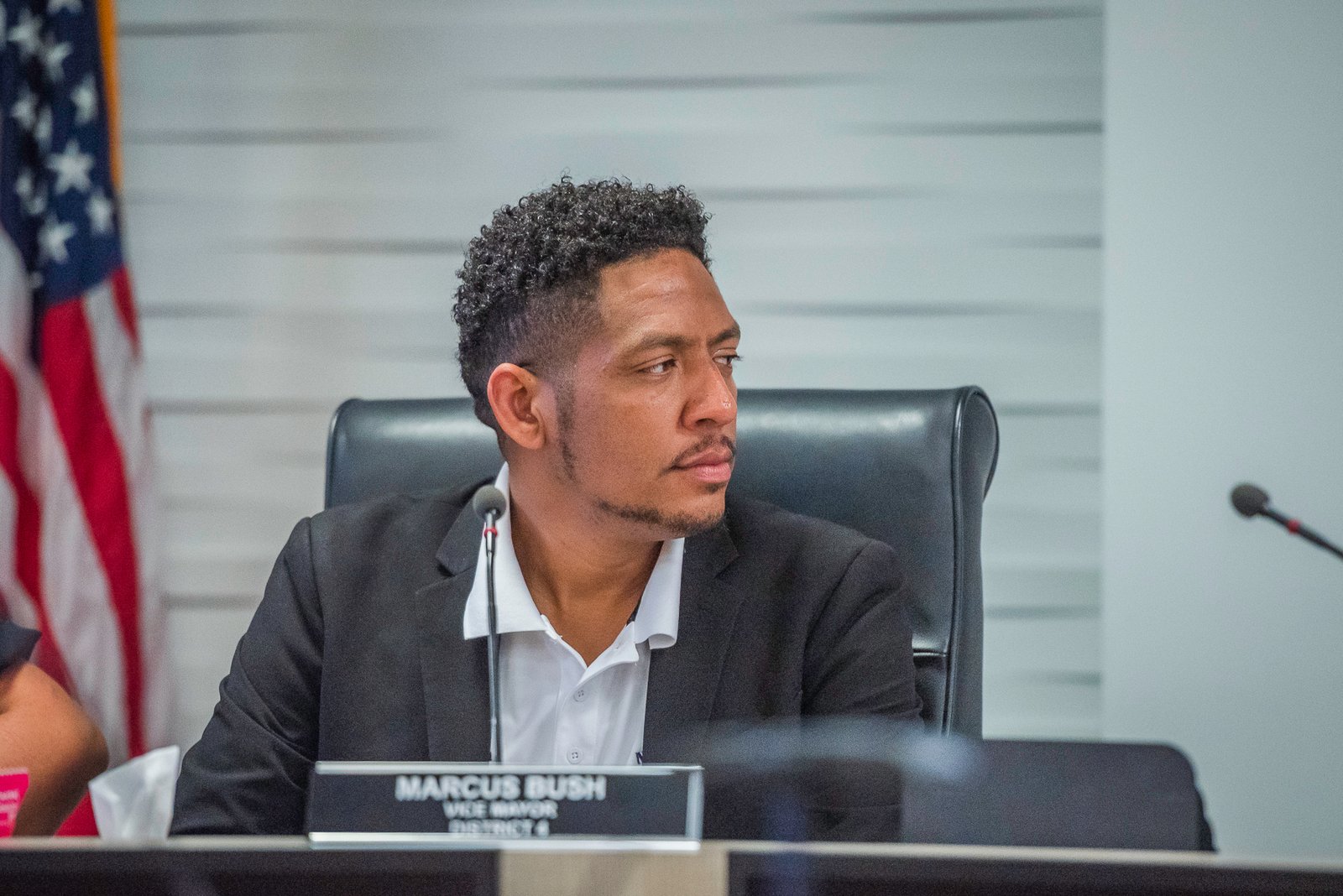
On Monday, City Councilmember Marcus Bush stepped in, setting up a contest between two former allies – Bush and Rodriguez – who have become frenemies at best.
Morrison endorsed Bush, who, in turn, sought to distinguish himself from Rodriguez by proclaiming himself open to working with Republicans, business interests and others with whom Bush, a Democrat, sometimes disagrees.
Rodriguez, also a Democrat, has made his alliance with San Diego County’s powerful labor movement a centerpiece of his campaign. He said he takes inspiration from his mother, who he said endured harsh working conditions and low pay as a non-union cleaner of Marriott hotel rooms.
The contest between the two councilmembers could turn bitter. Both candidates have lobbed personal attacks at each other during City Council meetings.
But the race will be substantive too, testing the relative power of organized labor and business interests in National City.
The city faces acute budget problems and a sagging economy. Expect both candidates to advance different solutions and engage different parts of the community.
One thing is almost certain. After years without a single Democratic mayor in heavily Democratic South County, National City likely will be led by a Democrat following the November election.
Also in the race are two candidates who have less obvious paths to victory: Longtime city treasurer Mitchel Beauchamp and environmental activist and political intern Jacobb Castrejon.
Chula Vista
Chula Vista held a primary election earlier this year that finalized matchups in contests for mayor and two City Council seats.
I’ve already reported on the candidacies of Republican mayoral incumbent John McCann and Democratic challenger Francisco Tamayo, a trustee for the Chula Vista Elementary School District.
Since the primary, McCann has emerged as a front-runner.
He won 56 percent of the primary vote, meaning Tamayo already has an uphill climb to claim a majority.
And McCann has vastly outperformed Tamayo in fundraising. So far this year, according to campaign filings, McCann raised more than $130,000. Tamayo raised just $18,000, with more than half that sum coming from a loan he made to his own campaign.
During the primary, Tamayo benefited from more than $150,000 in outside spending by a San Diego County labor union representing construction workers.
Since then, that same union ran into a buzzsaw of community opposition against a ballot measure the union sponsored that would have dramatically reshaped Chula Vista’s elected government. It’s not clear whether the union plans to play a decisive role in the November election.
Two City Council incumbents, Jose Preciado and Carolina Chavez, both Democrats, have Republican challengers who are mounting spirited attempts at an upset.
But the combination of incumbency and financial support from organized labor and other interest groups will make both councilmembers hard to beat.
Imperial Beach
America’s southwestern-most city brought its own election surprises.
Last week, City Councilmember Matthew Leyba-Gonzalez upended what had appeared to be a stable two-way race for mayor by filing to run days before a Friday deadline.
Leyba-Gonzalez’s last-minute entrance injected new issues and interest groups into the campaign and changed the electoral calculus.
Leyba-Gonzalez will face mayoral incumbent Mitch McKay and retired school administrator Karl Bradley, both of whom filed to run last month.
McKay isn’t a Republican (officially, he’s a registered independent) but he often votes like one.
Since taking office, he has sought to dial down the confrontational activism of his predecessor, County Supervisor Paloma Aguirre, in favor of a more low-key, behind-the-scenes effort to support city businesses and find solutions to the ongoing Tijuana River sewage crisis.
Bradley, a Democrat, promises a return to sewage activism. Until last week, the contest between the two candidates appeared likely to center on the sewage crisis.
Leyba-Gonzalez represents Imperial Beach’s fourth City Council district, which is farthest from the coast and home to some of the city’s lowest income and most ethnically diverse residents.
Leyba-Gonzaelz also works as a union business official and touts his close alliance with organized labor.
His entrance into the race highlights Imperial Beach’s complex political identity.
The city is home to vastly different communities. Beachfront retirees, surfers, entrepreneurs, environmentalists, latter-day hippies, workers at nearby military bases and an international array of immigrants call the city home.
Those constituencies share a love of their laid-back, embattled hometown. But they don’t always agree or even overlap in their experience of the city.
McKay probably will get support from business interests, retirees and residents who value his pragmatic style. Bradley can count on support from environmentalists and longtime Democrats.
Leyba-Gonzalez is more of a wildcard. He could carry his district or gain widespread support with the help of a vigorous, labor-backed advertising campaign.
Or he could split the Democratic vote and guarantee McKay’s victory.
I’ll need to do more reporting to get a better sense of how things are shaking out. Until then, I can say confidently that the I.B. mayoral race will be fascinating, and instructive, to watch.
There was one more surprise in Imperial Beach. At the last minute, City Councilmember Carol Seabury announced she would not seek re-election, citing medical and family issues.
The race to replace her now pits two candidates with very different constituencies and priorities.
Seabury, a Republican, endorsed Steve Berry, the owner of a local printing business who shares Seabury’s pro-business approach to policymaking.
Challenging Berry is Jose Lopez Eguino, a trustee for the South Bay Union School District and a local director for the community organizing group Alliance of Californians for Community Empowerment.
Last year, Lopez Eguino backed an effort to pass a tenant protection ordinance in Imperial Beach. He likely will run a campaign based on progressive solutions to Imperial Beach’s problems.
Once again, the race will pit different solutions, constituencies and priorities in the city that bills itself as Classic Southern California.
Related Posts