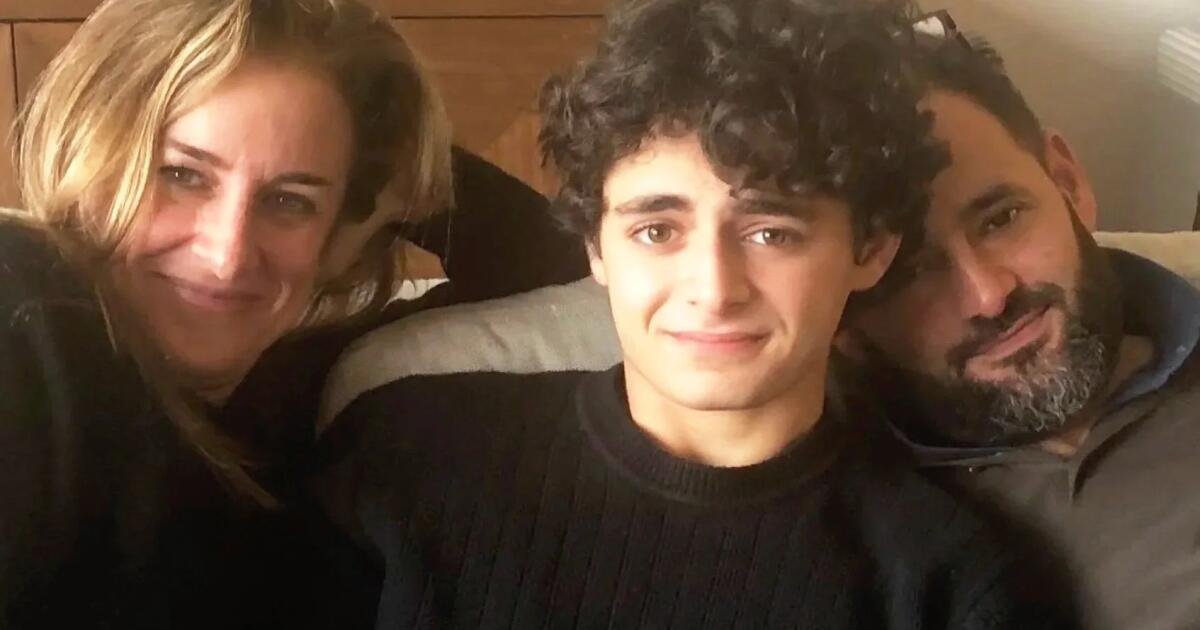
Like many young people with a diagnosis of attention deficit/hyperactivity disorder, Jacob Schreiber was creative, empathetic and endlessly curious. He found deep satisfaction in composing music and studying the stars. He took solace in understanding how and why the world worked as it did.His 2024 death from suicide at age 19 devastated his loved ones. In their grief, Schreiber’s family has turned to the questions Jake grappled with his whole life.“He was always searching for answers,” his mother Lori Schreiber said. “Why am I different from my sisters? Why do I feel different in my brain?”Jake Collective, a nonprofit foundation founded in Schreiber’s honor, is partnering with the American Foundation for Suicide Prevention on a five-year, $5 million research initiative devoted the mental health needs of neurodivergent children and adolescents. Brown University student Jacob Schreiber died by suicide in 2024 at the age of 19. (Courtesy of the Schreiber Family) “Neurodivergence” is an umbrella term for a variety of conditions that affect the way a person thinks or processes information, such as autism, ADHD or dyslexia.While each of these conditions manifests in a variety of different ways, research has identified a troubling pattern: children with diagnoses of autism or ADHD are, in general, more likely to experience depression, anxiety and other mental health conditions than their neurotypical peers, and to think about and die by suicide.Yet there is, to date, little evidence-based guidance on effective interventions for kids whose brains work differently. Even less of that information has reached the adults best positioned to support them in a crisis, such as parents, pediatricians and community therapists.“Suicide in the autism population is a serious concern, but we know so little,” said Dr. Paul Lipkin, a neurodevelopmental pediatrician at Kennedy Krieger Institute in Baltimore who is collaborating on the project. “I think people are recognizing that deserves more attention and understanding.”The initiative has already started convening expert panels of psychiatrists, pediatricians, neurobiologists and other researchers, alongside people with firsthand experience of living with neurodevelopmental conditions and mental health challenges, said Melissa Floren Filippone, Jake Collective’s chief executive officer.Their first publication, expected by the end of this year, will be a summary of the strongest research to date on the subject as well as the most significant questions that still need to be answered.Later, it will fund relevant research projects and develop education programs for parents and teachers, said Dr. Christine Yu Moutier, chief medical officer for the American Foundation for Suicide Prevention.The project is an “exciting opportunity to begin to close the research-to-practice gap,” said Jessica Schwartzman, director of the Training and Research to Empower NeuroDiversity Lab at Children’s Hospital Los Angeles and assistant professor of pediatrics at USC’s Keck School of Medicine.Schwartzman, who studies depression and anxiety disorders in neurodivergent youth and is not directly involved with the project, identified a number of key questions that the field still has to answer: What do signs of impending crisis look like in neurodivergent kids, and are they different from those of neurotypical children? What therapies are most helpful? How can providers get the information they need to understand their neurodiverse patients’ experience, and to give them the right kind of care?“I’m genuinely glad to see organizations at the national level addressing this gap,” said Samara Tricarico, co-founder of the non-profit Endurant Movement, which works with neurodivergent youth. Tricarico’s son Anthony died from suicide in 2024 at the age of 16.“He was autistic. He was loved. And we still didn’t have what we needed to reach him in time,” she said. “It’s an obvious deficit in our country’s mental health landscape, and I’m grateful that some larger, more established organizations are facing it head on with this initiative.”Samia McCall, whose daughter Maisa, 14, died by suicide in 2024, expressed hope that the initiative would focus on efforts to help communities embrace and adapt to children who often experience undue pressure to camouflage and conform.“We need to adjust environments, and we need to teach kids early in life how their unique brains work, how to advocate for themselves, and how to accommodate and support their own nervous systems. This happens largely by training the adults around them to understand them better,” she said. “Just like ramps and elevators help everyone, neurodiversity-affirming adjustments make the world more accessible for all of us.”