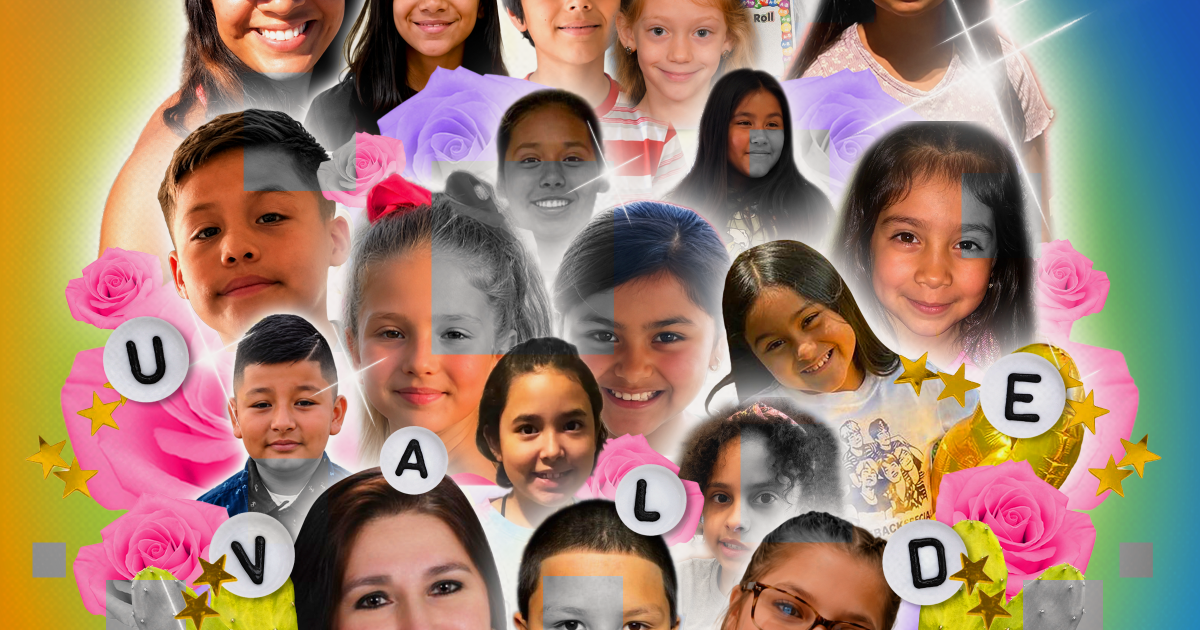
This Sunday is the four-year anniversary of the Uvalde, Texas, shooting — one of the deadliest school shootings in U.S. history. On May 24, 2022, 18-year-old Salvador Rolando Ramos entered Robb Elementary School and killed 19 students and two teachers. The tragic event shocked and horrified people across the country and fundamentally changed the largely working-class Latino city.A few days after the shooting, De Los editorial director Fidel Martinez noted that it was the “latest recurrence of our American nightmare.” In the four years since, I’m certain that every day has felt like a living nightmare for the families of the victims.I can’t help but think of the fact that DNA testing was required to positively identify the bodies of some of the children because the force of the assault weapons used on them had marred their bodies beyond recognition.Earlier that same day, many of the students were feted at an awards ceremony as proud parents cheered on. Within an hour of the celebration’s ending, the gunman began his rampage. All the kids who were murdered that day were between 9 and 11 years old. They should all be teenagers now. They should be doing some dumb stuff with their friends and partaking in awkward school dances. They should be circulating ridiculous memes online and uploading cringey TikTok videos. Some should be gearing up to celebrate their quinceañeras. They should be acing algebra tests, excelling in sports and joining bands.Instead, their families are left to long for the conversations and hugs that never were. I’m sure their parents wish they could be arguing with their rowdy little teenagers about screen time and academic responsibilities. All the bad and all the good are gone, senselessly ripped away from them.The anger and sadness I felt that day still rustles within me.When I look at pictures of those children, I see the familiar Latino faces that marked my own elementary school experiences. I think of the third-graders I oversaw when I was working at a grade school and how I would’ve had no idea what to do in an active shooter scenario.I hate that Robb Elementary teachers Eva Mireles and Irma Garcia were put in a position where they heroically laid down their lives to protect their students. What I especially hate is that we are four years removed from the shooting and nothing has changed to prevent another situation like this from happening again.Texas Gov. Greg Abbott has done less than nothing to restrict firearms in his trigger-happy state. He still proudly touts his affiliation to the National Rifle Assn. of America. Earlier this year, the NRA gleefully endorsed Abbott in his ongoing gubernatorial reelection bid.The group called him a “steadfast champion for gun rights in the Lone Star State” and applauded his efforts to “always fight for Texans’ rights to keep and bear arms.”Meanwhile, firearms continue to be the leading cause of death among young people under the age of 18 in Texas and nationally. Children get brutally killed and Abbott is still likely to once again get reelected this fall. That’s Texas for y’all.And let’s not forget the abject incompetence from the multiple federal, state and local law enforcement agencies that mishandled the shooting. Nearly 400 officers responded to the event and yet 77 minutes passed before anyone attempted to confront the shooter. This January, Adrian Gonzales — one of the on-duty police officers on the day of the shooting — was found not guilty of 29 counts of child endangerment by a Texas jury. Uvalde Consolidated Independent School District Police Department Chief Pete Arredondo has been charged with 10 counts of felony abandoning or endangering a child. His case has yet to go to trial. Truly a sinvergüenza, Arredondo offered to resign in return for a $1.1-million payout just two months after the shooting.There has been no justice.Mass shootings sure as hell haven’t gone away in the four years since Uvalde. Through April, there have been at least 121 mass shootings in the U.S. in 2026. Just earlier this week, the Muslim community was targeted in a mass shooting at the Islamic Center of San Diego. It occurred while a school that operates at the center and mosque was in session. The center’s gift shop worker Mansour Kaziha, longtime mosque attendee Nadir Awad and security guard Amin Abdullah were all killed during the rampage and have been heralded as heroes because they redirected and distracted the two active shooters from wreaking further havoc. “At no point [were they] hiding or running away from what’s happening,” the mosque’s head of security told NPR. “All three of them were heroes.”It is devastating that these men lost their lives that day, but their sacrifice saved the lives of dozens of children. These three men were infinitely more brave than the 400 officers of Uvalde. May they rest in peace knowing they lived lives of honor. (Jackie Rivera / For The Times; Martina Ibáñez-Baldor / Los Angeles Times) De Los is launching a podcast!That’s right! “The De Los Podcast” will explore Latino culture and identity through conversations with some of the most influential U.S. Latino figures. The project will be hosted by De Los editorial director Fidel Martinez and De Los editor Suzy Exposito. The weekly podcast premieres June 3. The series trailer is available now. The show’s inaugural guest is singer/actor/dancer Leslie Grace of “In the Heights” fame. Future guests of the podcast include actor Xolo Maridueña (“Blue Beetle,” “Cobra Kai”), Cuban American rapper Sen Dog of Cypress Hill, filmmaker Alex Rivera (“Sleep Dealer”) and author Vanessa Díaz (“P FKN R: How Bad Bunny Became the Global Voice of Puerto Rican Resistance”). If you’re a fan of this newsletter and of the great work that the De Los staff does, this podcast is must-listen programming. Make sure you follow the show on Apple Podcasts and Spotify, and give it a 5-star rating!Assassinated Mexican mayor’s crusading message lives onMy colleague Kate Linthicum wrote an excellent article about the politics of the Mexican city of Uruapan in the state of Michoacán, the city’s first family and what political resistance can look like in Mexico. The former mayor of Uruapan, Carlos Manzo, was a true disruptor in Mexican politics who dared to square off against cartel leaders. But the confrontations were more than just verbal — Manzo would frequently join in on nighttime police activity in the city. Manzo was politically forged by the cartels’ appalling displays of violence and looked to stamp it out with reciprocal displays of force against the crime organizations. Controversially, Manzo instructed police to use lethal force against any criminal who attacked citizens or resisted arrest after a municipal employee was shot to death outside a school. Ultimately, Manzo was assassinated in November 2025 and his wife, Grecia Quiroz, took up the mantle as Uruapan’s political head.You can read Kate’s full article here: Killing of vigilante hero in Mexico leaves his wife with an agonizing choice Political influencers are cashing in on California’s governor raceLast week, the De Los team noticed something interesting in the comment section of an Instagram post promoting Texas-based political influencer Carlos Eduardo Espina’s interview with journalists Jorge and Paola Ramos. Many people flooded the comments with support for California gubernatorial front-runner Xavier Becerra while admonishing Espina, accusing him of being a traitor for endorsing Tom Steyer. Some even went as far as to call Espina a “vendido,” a sellout.And, uhh, it turns out they were right!The New York Times recently reported that the Steyer campaign paid Espina $100,000. A Times report later found that several other influencers were collectively paid tens of thousands of dollars to promote the billionaire-turned-politician’s campaign or simply display his policies on-screen. Espina, who has 14.3 million followers on TikTok and delivers news catered to Latino audiences in both English and Spanish, did not disclose the payment in his endorsement post. Speaking with NYT, Espina said the Steyer campaign paid him, but he felt he didn’t need to attach a disclaimer on his posts because he wasn’t being paid to post. He clarified that he was hired as a consultant due to his knowledge on Latino issues.“People see me as a content creator, and they think all I do is content,” Espina said. “What I do is more of the advising side of things.”The Times has reached out to Espina for comment.Admittedly, I was already weary of Espina and his shock-and-awe delivery style, but his transgression still comes as a bit of a blow given that many Latinos follow him for timely, accurate news updates and see him as someone looking out for the community. But if he’s lining his pockets with money from candidates, how can people be so sure of his intentions?To be fair, Espina doesn’t appear to be the only influencer being paid by a political candidate. My colleague Ben Wieder reported earlier this week that Steyer’s campaign filed a complaint accusing Becerra’s camp of paying influencers who posted content supportive of him without disclosing that they had been paid, which is required by California law. The complaint accused influencer Jay Gonzalez of producing at least 14 pro-Becerra posts on Instagram and Facebook in late April and early May after he was hired by the campaign. Gonzalez eventually edited the posts to reflect that they were sponsored content.Stories we read this week that we think you should readUnless otherwise noted, stories below were published by the Los Angeles Times.Politics and immigrationArts & EntertainmentSouthern California