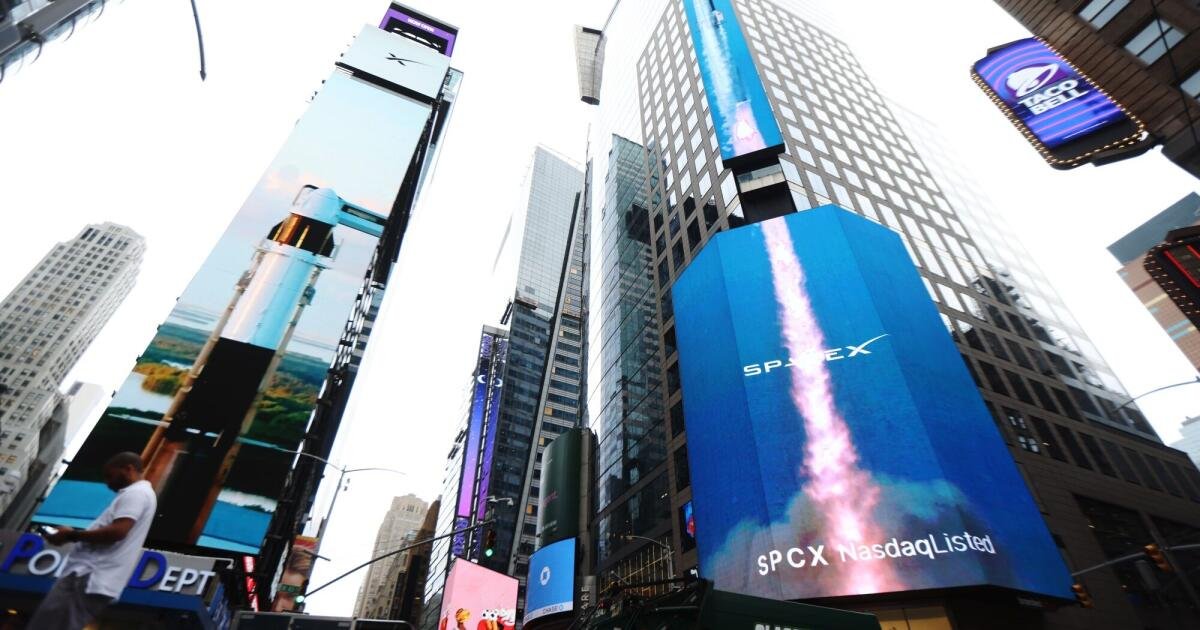
SpaceX has set the stage for one of the largest share unlocks in capital markets history, with as much as $116 billion worth of stock becoming eligible for sale for the first time next month.Restrictions preventing some insiders from selling as many as 911.5 million shares will lift on Aug. 6, two days after the rocket, satellite and artificial intelligence company reports quarterly results for the first time. That’s just the start, with billions of shares set to be freshly eligible for trading by the end of the year.Investors are weighing the potential impact of releases from the unusual staggered lock-up arrangement over the coming months, as SpaceX’s shares struggle to recapture their euphoria from last month following the biggest-ever IPO. The unlocks will see early investors and those who bought the stock in private markets looking to capitalize on massive returns, while short sellers can add to bearish bets.SpaceX’s lofty valuation, as well as preparations for a wave of potential selling pressure in August, drew a swarm of short-selling investors over the past month. About 30% of the shares currently available for trading are being sold short, data compiled by S3 Partners show. That skepticism has paid off to the tune of about $7 billion in paper profits, the data show, as the stock sits 37% below a June 16 closing high.If the stock stages a sharp rally in the coming days, as many as 455.8 million additional shares could be eligible for trading immediately after the earnings release. To clear the bar, the stock would need to sit at $175.50 in at least five of the 10 days through the results. That’d be more than 46% above Monday’s close at $119.85.WindfallEven after the recent swoon, insiders and early backers who owned SpaceX shares before the Elon Musk-led company went public are almost certainly in line for a windfall when they can finally sell. SpaceX was worth about $400 billion in a share sale just a year ago. That was also before the company acquired xAI earlier this year in a deal that gave SpaceX a valuation of $1 trillion at the time, and xAI a value of $250 billion, Bloomberg News reported. The xAI deal minted billions for investors and rewarded them with stakes in the now-public company worth multiples of their initial investments.Many will get their chance to exit by early December, when the number of shares available to trade will soar to 5.33 billion, up from around 639 million shares now, according to the initial public offering prospectus for Space Exploration Technologies Corp., as it’s formally known.Musk, who owns an aggregate of 7.8 billion shares accounting for roughly 60% of the outstanding stock, agreed to be locked up from selling through just over a year from the company’s June debut, the prospectus shows.The structure that the company and its bankers have laid out is unique when compared to traditional unlocks after IPOs. Normally, insiders are restricted from selling shares for 180 days before a potential wave of stock hits the market. Given the company’s size, the different structure was picked after the consideration of a range of options to expand the pool of shares available for trading without shocking the market’s supply-demand dynamics.Still, even at the current gradual pace of releases, the first unlock in August could entice more bears to pile on, and at a potential inflection point. SpaceX’s stock is on track to snap a seven-session losing streak which has erased $425 billion in market value, data compiled by Bloomberg show. The stock dropped in 10 of the past 12 sessions as investors rotated away from AI darlings and after SpaceX aborted a launch of its Starship rocket due to an engine issue. The volatility for SpaceX in recent days has helped pour cold water on the market for newly public companies with the weighted-average return for the year’s class dropping to a 4.4% decline, data compiled by Bloomberg show. Even when removing SpaceX and South Korean memory chipmaker SK Hynix Inc., which raised $26.5 billion in a sale of American depositary shares, the group’s return only perks up to 5.3%. That lags a 9.4% return for the benchmark S&P 500 Index. Lipschultz writes for Bloomberg.