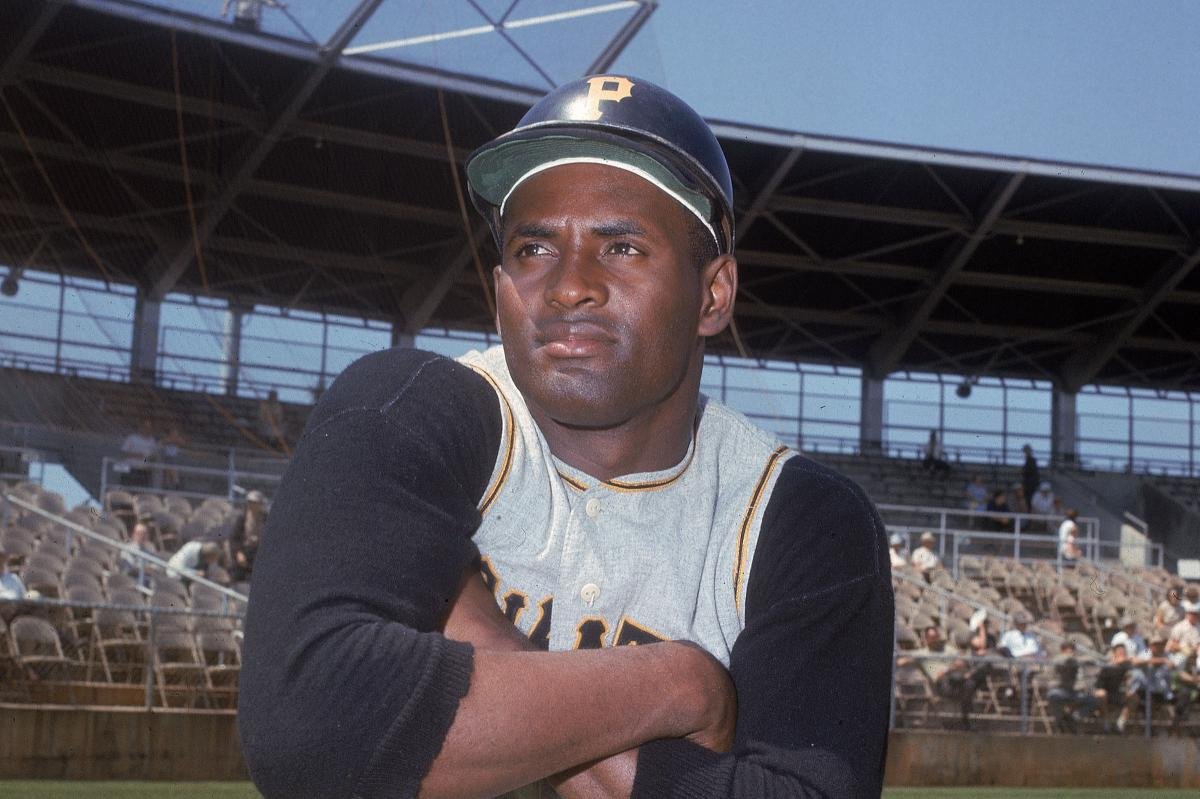
Roberto Clemente collected exactly 3,000 hits in his Hall of Fame career.
Puerto Rico’s government collected something else from his name: roughly $15 million.
In 2021, the commonwealth enacted laws requiring motorists to pay extra for license plates and registration tags bearing the baseball legend’s name, image, jersey number 21 and references to his hit total.
The money went into a government fund.
But Clemente’s sons, who have spent decades preserving and licensing their father’s trademark and humanitarian legacy, objected to the program — and received none of its proceeds.
So with the help of the Beacon Center of Tennessee they sued under the Lanham Act, which governs trademarks, and the Fifth Amendment’s Takings Clause.
The US Court of Appeals for the First Circuit allowed parts of their trademark case to continue but tossed the constitutional claim, reasoning that the Supreme Court’s categorical rule requiring compensation when government takes property applies only to tangible goods.
A trademark, being “intangible,” gets sent to the legal minor leagues: the open-ended Penn Central balancing test, under which property owners rarely score.
The Supreme Court should call that distinction out — because the Constitution has never treated invisible property as a foul ball.
The Fifth Amendment says that “private property” shall not “be taken for public use, without just compensation.”
It says nothing about property that can be weighed, measured, fenced or stuffed into a warehouse.
At the Founding, property included incorporeal rights — franchises, easements, contract rights and other valuable interests existing in law rather than in physical form.
William Blackstone wrote about “incorporeal hereditaments”; James Madison described property broadly as everything to which a person may attach value and claim a right.
Early American takings cases followed the same understanding: Governments could condemn incorporeal rights, but they had to pay.
In 1848, the Supreme Court rejected the attempted distinction between corporeal property and a bridge franchise — the right to charge a toll on a privately built structure — as a “refinement” with “no foundation in reason.”
Later cases protected patents, contracts, liens, interest income and trade secrets — none of which could be carried off in a wheelbarrow.
Get opinions and commentary from our columnists
Subscribe to our daily Post Opinion newsletter!
Thanks for signing up!
A trademark fits comfortably in that tradition.
Its commercial value rests on exclusivity: The owner decides who may use the mark, for what purpose, and on what terms.
The mark carries the goodwill built around a name or business.
When an unauthorized user exploits it, the owner loses control over the association that gives the mark its value.
Puerto Rico did more than mention Clemente, honor him in a proclamation, or place his story in a museum — it put his mark on government-issued products, set a price, collected fees, and kept the money.
The government stepped up to the plate as an unlicensed commercial user, then declared itself immune from the rules binding everyone else.
Supreme Court precedent already supplies the proper scorecard.
In Horne v. Department of Agriculture (2015), the court held that government must pay when it appropriates personal property, just as when it takes land.
In Cedar Point Nursery v. Hassid (2021), the court emphasized the central importance of the right to exclude.
And in Ruckelshaus v. Monsanto (1984), it recognized trade secrets as property protected by the Takings Clause despite their intangible nature.
The First Circuit’s rule would leave the modern economy’s most important assets exposed.
Brands, data, trade secrets, licenses, publicity rights and business goodwill often exceed the value of a company’s buildings or inventory.
A constitutional doctrine that protects raisins — the subject of the Horne case — more securely than trademarks has lost sight of the ball.
The danger is especially acute in Puerto Rico, where entrepreneurs and investors need confidence that successful brands and other intangible assets can’t be commandeered by statute without fair compensation.
There’s also a remedial squeeze: The First Circuit held that Puerto Rico enjoys state-like sovereign immunity that the Lanham Act didn’t displace.
That’s why the Manhattan Institute filed an amicus brief supporting the Clementes, alongside the Instituto de Libertad Económica, Puerto Rico’s free-market think tank.
We take no position on the ultimate immunity question, but combining immunity with second-class constitutional treatment for intangible property could leave owners holding a right with no meaningful remedy after the government has already monetized it.
Roberto Clemente’s legacy belongs in Puerto Rican history and culture, but his registered commercial mark still belongs to his family.
The commonwealth was free to negotiate a license, seek the family’s cooperation, or design a voluntary tribute; it chose instead to legislate itself permission and pocket the revenue.
The Supreme Court should take up Clemente Properties v. Pierluisi-Urrutia and restore the legal line that the Constitution has always drawn: When government takes private property for public use, it must pay for it.
Even a government playing on its home field must follow the rules of the game.
Ilya Shapiro is author of the Shapiro’s Gavel newsletter. Adapted from City Journal.