The quickest way we can make America healthier, starting today, is to cook more food in our own kitchens.
This isn’t for next year or after Congress passes another bill; it’s today.
The more often people cook at home, the healthier they eat and the lower their risk of obesity, Type 2 diabetes and a portfolio of other chronic diseases. Imagine if every American family replaced just one takeout dinner each week with a home-cooked meal made from real ingredients.
Somewhere along the way, we stopped teaching Americans how to cook.
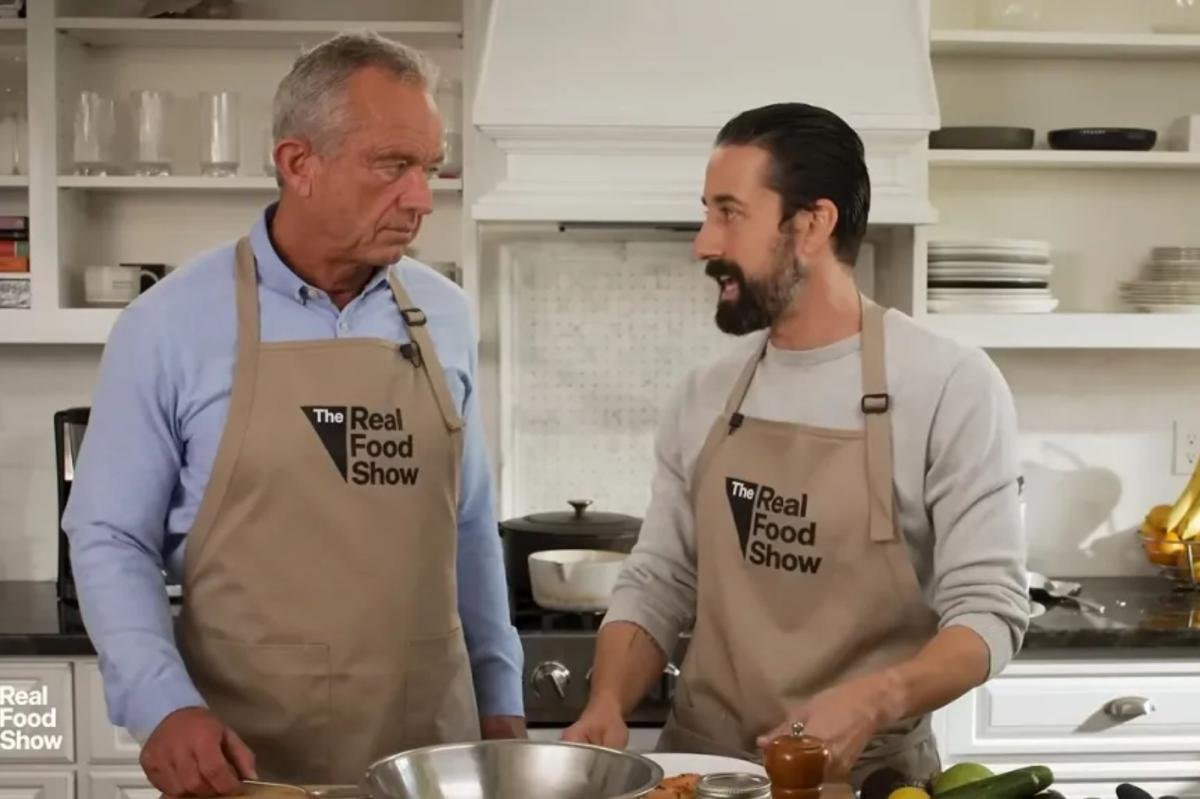
Secretary Robert F. Kennedy, Jr. and Andrew Gruel
Schools ripped out home economics classes and kitchens, as families got busier. Real food became extinct while convenience became king. Instead of learning how to roast a chicken or scramble an egg, generations grew up learning how to peel back plastic lids, hunt for $1 menus and press the microwave button.
What was the inevitable result? We traded cooking for convenience, and real food for products designed in laboratories –– and America got sick.
Walk through the center aisles of almost any grocery store, and you’ll find shelves lined with boxes whose ingredient labels read like a Tolstoy novel.
Meanwhile, the healthiest parts of the store, the perimeter that stores the produce, meat, seafood, dairy and eggs, are often ignored because too many Americans have never been taught what to do with them. So they default to Lean Cuisine, drive-thrus and Hot Cheetos.
I understand this because I lived it.
I grew up in New Jersey with two hardworking parents. Dinner wasn’t a family ritual; it was whatever could get on the table the fastest. The microwave was the family chef (chef Mike) and fast food or pizza filled in the gaps. I honestly didn’t know eggs could be cooked any other way until I skipped school one day as a 12-year-old and stumbled onto PBS cooking shows.
Watching someone transform a handful of simple ingredients into an incredible meal completely changed how I looked at food.
I was intimidated at first; then I started mixing ingredients. Within a few hours, I realized something that has shaped my entire career: Cooking isn’t nearly as hard as we’ve convinced ourselves it is.
Sign up for the California Morning Report newsletter
California’s top news, sports and entertainment delivered to your inbox every day.
Thanks for signing up!
Unfortunately, we’ve spent decades convincing people of the opposite.
Television has turned cooking into competition. It’s as if everyone is supposed to beat Bobby Flay, plate like Gordon Ramsay, or race the clock on reality shows. I hate to break it to you, but that’s all produced. Cooking is actually simple.
That’s why I was excited when Health and Human Services Secretary Robert F. Kennedy Jr. asked me to appear in the first episode of “The Real Food Show.”
The goal isn’t to create a million Emerils. The goal is simple: to show Americans they can cook affordable, crave-worthy meals using real ingredients, and that those meals often cost less than relying on processed convenience foods.
This conversation couldn’t come at a more important time because for decades, our healthcare system has become exceptionally good at treating chronic disease –– but we’ve become far less effective at preventing it.
Rates of obesity, Type 2 diabetes, fatty liver disease and other diet-related illnesses continue to rise, especially among children.
While no single food is a cure-all, we know that diets centered on minimally processed foods are associated with better long-term health. We don’t just need better medicine; we need “healthier” habits. These habits thrive in the kitchen.
My wife Lauren and I both work as chefs. We own restaurants and routinely work 70-hour weeks. Yet one thing remains non-negotiable for us: eating together as a family. Our kids help prep dinner (free labor) because kids who help prepare their own meals are more likely to eat them. It’s as if they have equity in the dish, so they consume it all.
They become curious about food, and build confidence in the kitchen. Most importantly, they’re learning skills that will stay with them long after they’ve forgotten what they scored on a spelling test.
However, cooking together isn’t just about nutrition; it’s about slowing down long enough to share a meal with the people who matter most. To ask silly questions, watch the kids fight over the last taco. Food is the great unifier.
My own health journey reinforced this lesson. As a competitive endurance athlete, I bought into the conventional wisdom that loading up on processed carbohydrates and seed oils was the key to performance, eating almost no protein. Instead, I developed severe irritable bowel syndrome that sent me through years of doctors’ appointments, medications and conflicting nutrition advice.
Ironically, the pain got so bad, I left college to work in kitchens because it was a safe place to be; for me the chaos was calm while hiding in the “back of the house” –– no worries about my stomach.
As I learned more about food (going back to culinary school as well), I realized the answers to my health issues weren’t coming from another prescription; they were coming from my kitchen.
Food would fix me.
Learning to cook didn’t just give me a career; it gave me my health back.
And that’s why it’s personal for me to share good food; it’s why I became a chef. America doesn’t need everyone to become a professional chef, nor do we need every family making elaborate three-course dinners.
But we do need more Americans to believe they can walk into a grocery store, buy real ingredients, make a meal, and save money doing so.
If “The Real Food Show” convinces families to cook one more dinner each week, we’ve accomplished something far more important than producing another cooking program. This administration has taken one small step toward making America healthier, one kitchen at a time.
Andrew Gruel is a chef, television host, and member of the Huntington Beach City Council.
Download The California Post App, follow us on social, and subscribe to our newsletters
California Post News: Facebook, Instagram, TikTok, X, YouTube, WhatsApp, LinkedInCalifornia Post Sports Facebook, Instagram, TikTok, YouTube, XCalifornia Post Opinion California Post Newsletters: Sign up here!California Post App: Download here!Home delivery: Sign up here!Page Six Hollywood: Sign up here!