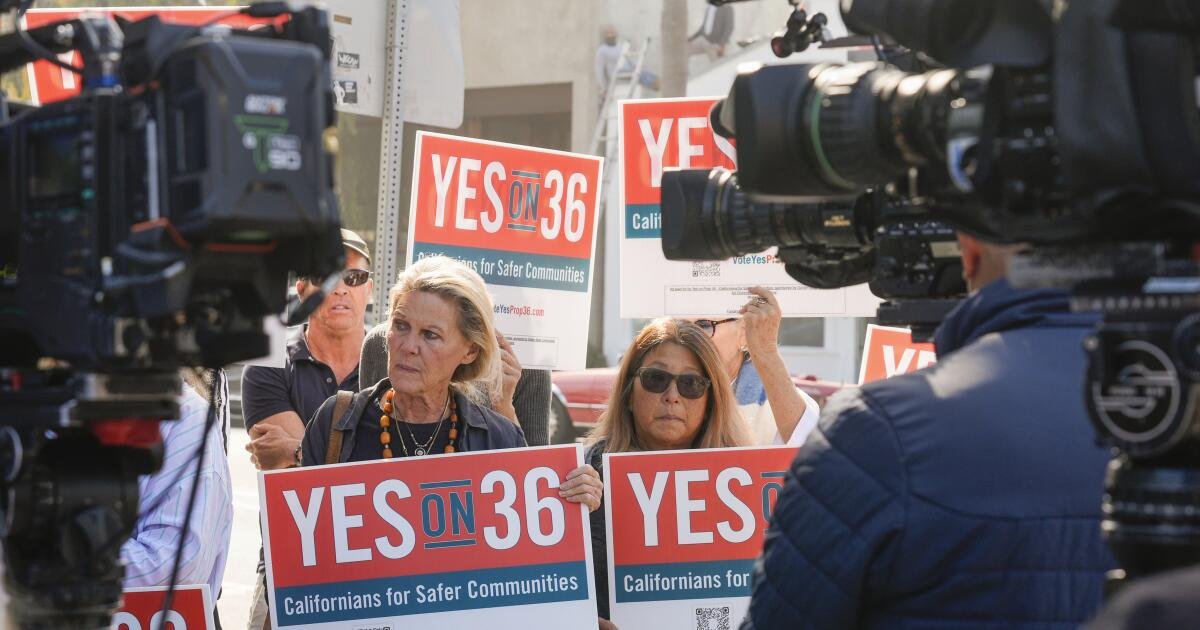
A few years ago, when viral videos of marauding packs of smash-and-grab thieves and open drug markets in San Francisco seemed to be everywhere, a group of tough-on-crime conservatives mashed the two issues together and created Proposition 36 — a set of new laws that supposedly would combine addiction treatment with punishment for those who refused or failed to kick their miscreant ways. Voters, fed up with perceived lawlessness, were supportive, passing the measure statewide by nearly 70% in 2024 — buying into the idea that it would bring more access to recovery in lieu of incarceration.Flash forward to 2026 and the realities of Proposition 36 are far from what most voters likely thought they were approving. It would not be too much of a stretch to call the implementation of Proposition 36 a steaming hot mess — one that has put California on the path of dealing with chronic homelessness through stints of incarceration. “The big promise of Proposition 36 was that folks struggling with addiction could have access to treatment, complete that treatment, and then it wouldn’t impact their record,” said Maureen Washburn, senior policy manager with the nonprofit Center on Juvenile and Criminal Justice. “But what we’re seeing is like less than 1% of people have realized that benefit. Instead, many, many more are getting arrested.”Proposition 36 created a new kind of serious crime — the “treatment-mandated felony.” So far, that has translated to about 40,000 new felony arrests statewide on drug or theft charges, many of them petty theft from repeat offenders, or repeat drug possession charges. Though the data are incomplete and flawed, of 10,937 felony drug cases tracked by 29 courts that reported to the state, 1,305 defendants elected to receive treatment. Of these, 36 successfully completed treatment and had their charges dismissed. Not great numbers. Meanwhile, thousands more are waiting in county jails for cases that are winding through a new, convoluted and confusing system where geography controls the rules. Every county is doing its own thing, with varying results. And more than 1,000 people have been sent to state prison under the new laws — a punishment that seems to be falling most heavily on older, Black defendants, some of whom have likely struggled with addiction and homelessness for years. So whose fault is this fiasco? That requires a quick bit of history. Before putting Proposition 36 on the ballot, law enforcement types including sheriffs and district attorneys tried to persuade the Legislature to do something similar. However, the Legislature had just spent a decade trying to undo California’s over-incarceration of Black and brown people, and wasn’t interested in new laws that would potentially target those very folks. So despite months of negotiations and the strong disapproval of Gov. Gavin Newsom, the pro-Proposition 36 crowd eventually went straight to voters with an idea that sounded good on the surface but lacked the most important element: money. Proposition 36, without the backing of the Legislature or the governor, included no way to pay for any of its promises. The idea at the time was to pass it, thereby putting pressure on the Democratic Legislature to fund it, as the will of the people. But without a built-in funding mechanism, that realistically means that funding, if any, is year-by-year and unpredictable at best. Newsom and the Legislature approved $100 million split between county behavioral health services and courts after it passed. This year’s budget cuts that to $50 million. Republican legislators wanted $400 million. Without that kind of money, Proposition 36 backers argue that the governor and the Legislature are unfairly crippling the new laws. “Without adequate resources for probation and sheriffs, the only treatment provided is a revolving door of suggestions. Treatment doesn’t work without support, and second chances are not real without consequences,” the Chief Probation Officers of California, California State Sheriffs’ Assn., and the California District Attorneys Assn. said in a statement.Adequate resources for probation and sheriffs. Now we’re at the heart of it. Virtually everyone on either side of this issue agrees that California does not have enough addiction services. Simply put, Proposition 36 promises a way out of incarceration that does not currently exist. The law enforcement types behind it would like the state to provide them with enough cash to build a treatment system. But here’s my problem with that — we already are funding and building a treatment system (albeit too slowly) with hundreds of millions of dollars going into housing, supportive housing and behavioral health. The state’s Project Homekey has allocated nearly a billion dollars toward supportive housing, creating 2,749 affordable homes for folks with behavioral health challenges at risk of homelessness — issues often tied up in a ball with addiction. Meanwhile, money saved from Proposition 47 — which Proposition 36 sought to undo — has given tens of billions to community-based organizations that specialize in addiction, trauma, homelessness and, again, the places where issues like this come together. I’m not here to argue we are doing a great job on the recovery front, that we’re spending enough or that we’re spending well. But Proposition 36 backers are asking for money to largely create an alternative to existing systems — one that ends in punishment for those who fail. In some counties, courts have set up departments dedicated to Proposition 36 cases, hiring staff and creating rules as they go. Law enforcement agencies are “now trying to reinvent themselves as social workers, as drug counselors, as this and that,” said George Galvis, executive director of Communities United for Restorative Youth Justice. “But they’re also the jailers, and so it just does not work.” Kate Chatfield, executive director of the California Public Defenders Assn., said the confusion has led to a system that is rife with “punitive and vague consequences.”What defines success at treatment? Ten days clean? Three years? Who pays for it? Who decides what success is — a sheriff’s deputy? A judge? A social worker?Along with not having money, Proposition 36 didn’t come with rules. Some in law enforcement love it because they can arrest folks on serious charges that, before the new laws, would have been misdemeanors that many felt weren’t worth the paperwork. But Chatfield said its hard to even advise clients to accept a Proposition 36 route because there is so little clarity on what it will mean. To Chatfield and others working in the system, giving more money to Proposition 36 makes little sense. Just because it exists “doesn’t mean that we have to fund a failing program,” she said. And that’s where we are at: a hot mess. Funding Proposition 36 probably means “we’re going to go back to this antiquated mass incarceration dynamic that nearly bankrupted the state of California back in the day, right?” Galvis said. Not funding it means the governor and the Legislature will continue to face attacks that they are ignoring the will of the people.Meanwhile, those with chronic addictions who are poor (because rich people with addictions are rarely as visible) will continue to be swept up, and left with a system riddled with false promises and real penalties.