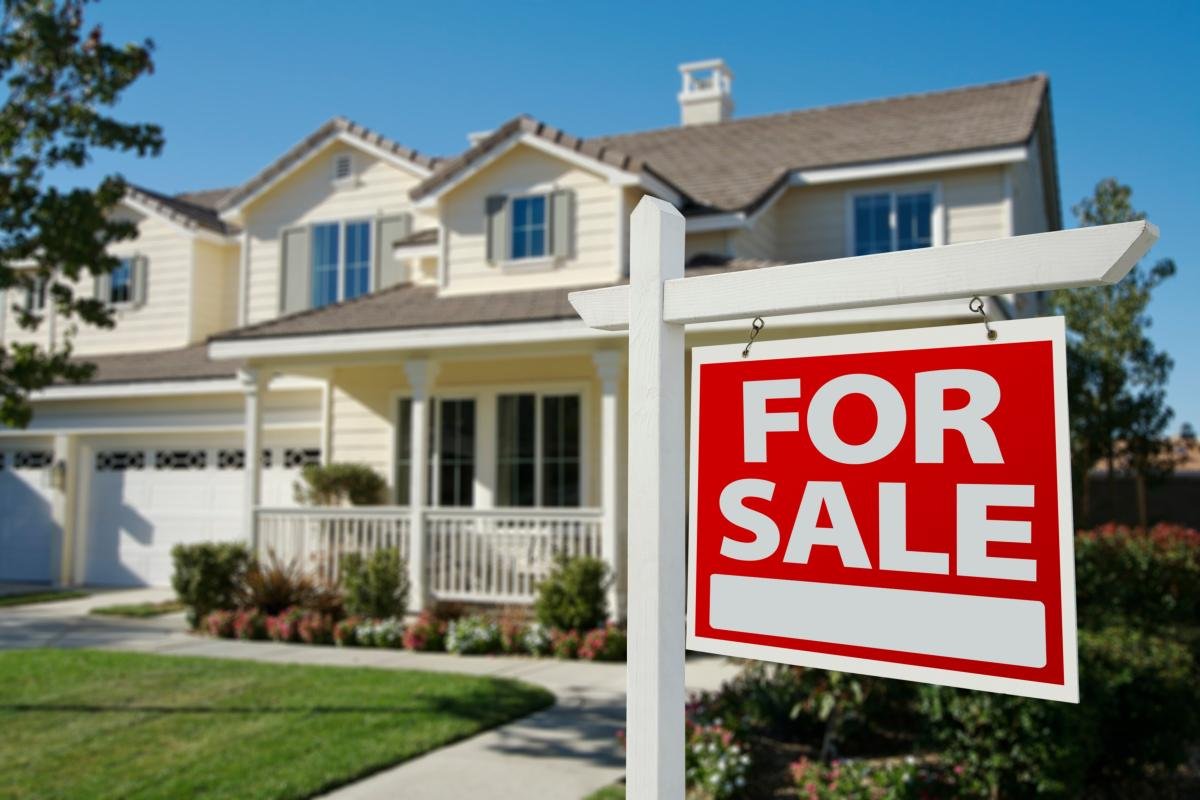
Budget buyers seeking entry into homeownership are finally getting some relief as the national supply of starter homes is beginning to improve. But like most aspects of the housing market, the recovery remains sluggish and starkly divided by region.
A starter home is defined by Realtor.com® economists as any listings priced below $350,000 nationally, or below 80% of a local market’s median list price. For example, in Phoenix, where the median asking price sits at $489,500 as of June, the starter home threshold is roughly $391,200.
Typically smaller and more modest than their pricier counterparts, starter homes serve as the first step on the property ladder for first-time homebuyers without the benefit of existing home equity.
No-frills, low-cost starter homes have been in short supply for years. According to a new Realtor.com report released Monday, the inventory crunch peaked in 2022, when frenzied pandemic-era demand drove up real estate prices to record highs and left entry-level buyers with fewer options than at any point in recent history.
Budget buyers seeking entry into homeownership are finally getting some relief as the national supply of starter homes is beginning to improve. Gorodenkoff – stock.adobe.com
Today, there are 220,000 more starter homes for sale than there were four years ago, and prices are down 4.2%, but Realtor.com senior economist Hannah Jones points out that this crucial market segment is still facing an uphill battle.
There are still approximately 300,000 fewer low-cost listings now than there were in 2019, and the typical starter home comes with a nearly $90,000 premium.
When mortgage rates are factored in, qualifying for a starter home now requires a household income of around $78,000, up from just $43,000 seven years ago.
The starter home market looks drastically different depending on the region, with the well-supplied South presenting the rosiest picture. Jacob Lund – stock.adobe.com
What’s more, the starter home market looks drastically different depending on the region, with the well-supplied South presenting the rosiest picture. Thanks to an accelerated pace of new construction, builders in the area have been able to meet demand.
Southern building frenzy
Since 2022, the Southern starter home price threshold dropped 3.5%, moving from $323,000 to $311,000.
Meanwhile, the share of listings below $350,000 increased from below 40% in mid-2023 to 43.6% today, translating into nearly 170,000 more affordable options than at the height off the housing crunch.
“Sun Belt builders ramped up supply during the boom years, and that inventory has reached the market just as demand has moderated,” says Jones. “The result is a region where buyers have more options and more negotiating leverage than anywhere else in the country.”
In the West, the narrative surrounding starter homes is not as clear-cut. As a whole, the region saw its starter home threshold drop 7.3% between 2022 and 2026 to $480,000, yet it is still well above the 2019 benchmark of $368,000.
Since 2022, the Southern starter home price threshold dropped 3.5%, moving from $323,000 to $311,000. Andy Dean – stock.adobe.com
Looking at Western inventory of affordable homes, just 16.7% of listings are currently priced below $350,000, or 23,000 more units than there were in 2022.
This market shift reflects meaningful progress toward affordability in several major regional markets including Denver and Phoenix, where first-time buyers are finally getting a leg up after being effectively sidelined just a few years earlier.
“The biggest factor boosting affordability in that segment right now is supply, which has ballooned to nearly five months of inventory,” Michelle Schwinghammer, an agent with West + Main Homes in Denver, tells Realtor.com. “That’s significantly higher than recent years and is putting meaningful downward pressure on prices.”
According to Schinghammer, the other major factor easing the financial burden is seller concessions.
This market shift reflects meaningful progress toward affordability in several major regional markets. Christopher Sadowski for NY Post
“More than half of Denver sellers are actively conceding at closing, with buyers winning five- and even six-figure seller credits,” she says. “Those credits can help cover closing costs but are increasingly being used to fund interest rate buydowns, an especially common incentive in new construction.”
Heather O’Leary, an agent at eXp in Denver, argues that construction alone won’t solve the affordability problem that first-time buyers face.
“The key to improving starter-home affordability is not just building more homes,” she tells Realtor.com. “It is expanding the types of homes buyers are willing to consider and taking advantage of the increased inventory, softer pricing, and stronger negotiating position within the attached-home market.”
This is also the first-time buyers are finally getting a leg up after being effectively sidelined just a few years earlier. Dragana Gordic – stock.adobe.com
Mixed signals in the Midwest
On the other side of the starter home spectrum, the chronically undersupplied Northeast and Midwest are facing even steeper hurdles.
As Jones explains, the Midwest finds itself in a tough spot. With a starter home threshold of just $263,920, the region remains the most affordable in the U.S. in absolute terms, yet for budget buyers the window of opportunity may be narrowing, because the price has increased 10% since 2022 and more than 37% since 2019.
A look at the inventory of low-priced homes drives this point home, as the share of starter listings has shrunk from roughly 70% in 2019 down to 55% in the spring of 2026.
View of the Midwest, and while they are still more affordable than much of the country, buyers are definitely feeling the pressure too. Dansker Digital – stock.adobe.com
“While the Midwest is still more affordable than much of the country, buyers are definitely feeling the pressure here too,” Erica Collica Swink, associate broker at Max Broock Realtors in Detroit, tells Realtor.com.
Supply crisis roils Northeast
Among the four regions, the Northeast is in the worst shape when it comes to housing affordability, and entry-level buyers are bearing the brunt of a restrictive, inventory-starved market.
The Northeastern starter home threshold surged to $443,600 this year, up nearly 50% compared to 2019 and nearly 13% above the 2022 level.
At that price point, entry-level homeownership in the region’s major metros is increasingly reserved for buyers with significant generational wealth, or exceptionally high incomes, undercutting the very purpose of a starter home.
Northeast view in Pennsylvania. jonbilous – stock.adobe.com
“The structural reasons are well-established: dense, built-out markets with limited developable land; restrictive zoning that constrains new construction; and strong, persistent demand from high-income households concentrated in major metro areas,” says Jones.
Andy Oei, real estate agent at Berkshire Hathaway HomeServices Fox & Roach Realtors in Philadelphia, says finding budget-friendly homes in desirable neighborhoods remains a key stumbling block.
“The structural reasons are well-established: dense, built-out markets with limited developable land; restrictive zoning that constrains new construction; and strong, persistent demand from high-income households concentrated in major metro areas,” says Jones.
Andy Oei, real estate agent at Berkshire Hathaway HomeServices Fox & Roach Realtors in Philadelphia, says finding budget-friendly homes in desirable neighborhoods remains a key stumbling block.