There are a lot of problems with California’s proposed “billionaire tax,” Proposition 40. One of the biggest is how a billionaire might actually pay it.
Tech founders usually have their wealth tied up in their companies. And they could not easily sell their shares to pay massive tax bills.
A founder can own, say, 20% of a private company valued at several billion dollars, and therefore be a billionaire on paper, while having nowhere near $50 million in cash, much less the liquidity necessary to pay a 5% wealth tax without selling or borrowing against the company.
There are a lot of problems with California’s proposed “billionaire tax,” Proposition 40. One of the biggest is how a billionaire might actually pay it. Shannon Finney/NBC via Getty Images
So how would such a billionaire pay it?
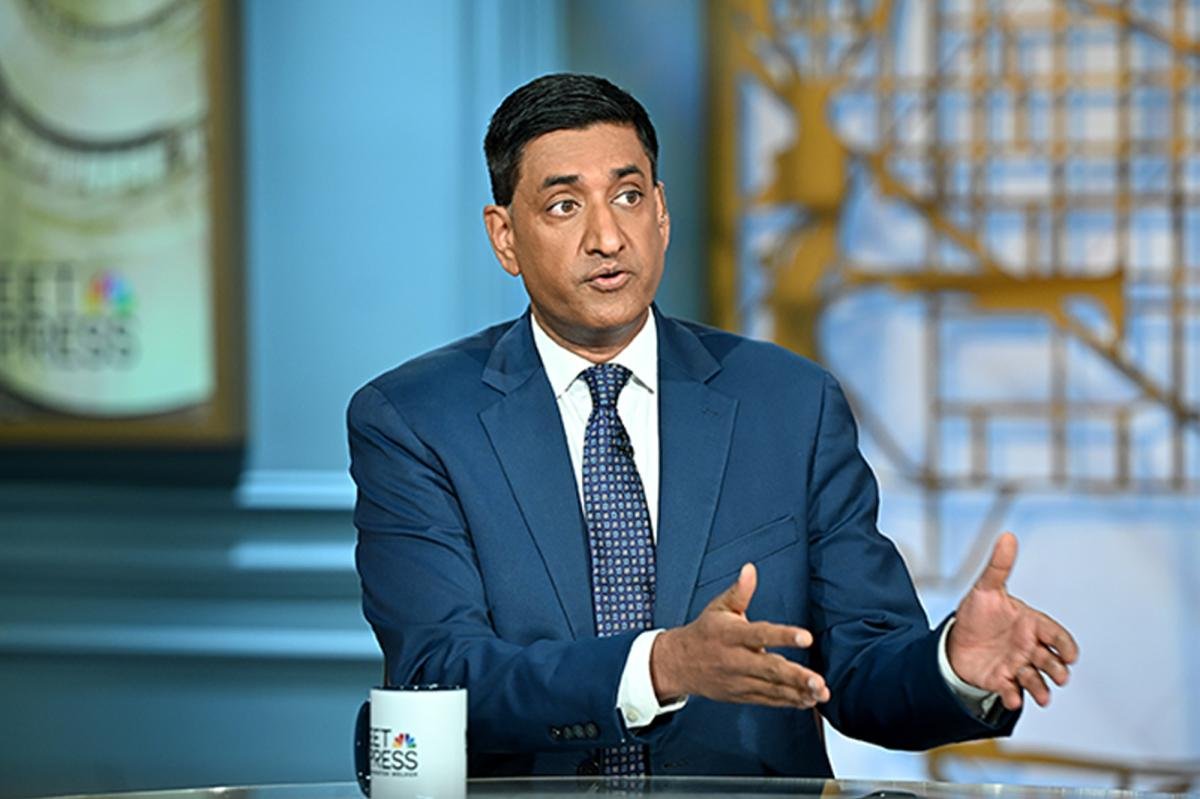
This week, while debating billionaire Mark Cuban on social media, Rep. Ro Khanna came up with a terrible idea: that the government should somehow lend money to billionaire entrepreneurs to pay the wealth tax.
The founder would pledge shares, California would finance the tax payment through a loan, and roughly 10 years later the founder would either pay off the loan, or the state government would seize the shares.
Sign up for the California Morning Report newsletter
California’s top news, sports and entertainment delivered to your inbox every day.
Thanks for signing up!
And so Prop. 40 isn’t just a “tax.” It’s something close to compulsory state ownership of growing businesses.
Cuban responded that Khanna’s proposal would force founders and investors to leave California to avoid being forced to take out massive loans or give up their companies. Cuban added that he himself would tell founders to leave California before he would invest a penny in their companies, if the measure passes this November.
There would be other effects as well. Let’s suppose you’re a recent Stanford graduate, like myself, and your startup is worth $300 million, and growing rapidly. You don’t wait until the morning Forbes declares you a billionaire to think about California tax residency. You leave ASAP.
This week, while debating billionaire Mark Cuban on social media, Rep. Ro Khanna came up with a terrible idea: that the government should somehow lend money to billionaire entrepreneurs to pay the wealth tax. Ron Sachs – CNP for NY Post
The reality is that people who are successful in the business world (and their lawyers and accountants) start thinking about financial risks for years beforehand. That creates a potentially enormous selection effect: The people most likely to leave California are precisely the people whose wealth California hopes will grow enough to tax.
The fact that the state could end up seizing the shares of founders who can’t repay their loans means that the state could be taking ownership of companies that would be worthless, down the road.
In economic terms, the state has the downside associated with the tax liability, and very little of the upside.
The ostensible goal of Prop. 40 is to raise revenue for healthcare. But if the state lends a founder $50 million to pay a $50 million tax bill, the net cash revenue to California in Year One is literally $0. The state is using its own funds to pay itself. It provides zero immediate cash for healthcare.
Download The California Post App, follow us on social, and subscribe to our newsletters
California Post News: Facebook, Instagram, TikTok, X, YouTube, WhatsApp, LinkedInCalifornia Post Sports Facebook, Instagram, TikTok, YouTube, XCalifornia Post Opinion California Post Newsletters: Sign up here!California Post App: Download here!Home delivery: Sign up here!Page Six Hollywood: Sign up here!
Rep. Ro Khanna, D-Calif., speaks at a Martin Luther King Jr. Day commemoration at the South Carolina Statehouse on Monday, Jan. 19, 2026, in Columbia, S.C. (Copyright 2026 The Associated Press. All rights reserved) AP Photo/Meg Kinnard
California might already be learning how costly Prop. 40 might be. Recent research by my Hoover Institution colleagues suggests that fleeing billionaires have already taken nearly 30% of the wealth targeted by the “billionaire tax” out of the state. My colleagues also warn that the tax would collect roughly $40 billion, rather than the $100 billion advertised.
More importantly, California’s billionaires currently pay an estimated $3.3 billion to $5.8 billion each year in state income taxes. Once you account for the future income-tax revenue lost when billionaires leave, the wealth tax could actually end up costing California money.
Khanna is posturing ahead of a likely 2028 presidential run, having recently morphed from a pro-business Silicon Valley Democrat to a progressive, socialist Bernie Sanders Democrat.
California doesn’t need to become a venture lender to its billionaires. That’s a strange kind of socialism. And it is doomed to fail.
Jon Hartley is a policy fellow at the Hoover Institution and an assistant professor of economics at the UT-Austin School of Civic Leadership.